Tuesday, December 22, 2009

Nashville (1975)


A minor controversy arose in the online film scene this past October, when Richard Schickel, film historian and critic for Time magazine, launched a scathing critique of Robert Altman in the LA Times. The occasion was a new book, Robert Altman: The Oral Biography, but Schickel spent most of the article denouncing Altman's personal failings, in addition to spouting out pithy attacks on his films ("To make sure the audience never quite understood what was going on, he overlapped dialogue..."). Schickel concludes that Altman's films are hopelessly dated, and will not "survive as anything more than historical curiosities."

A film like Nashville is undoubtedly emblematic of its times - what with the long hair, the hippies, the drugs, and the music. But what Altman manages to do is create a sardonic commentary on the times posing as a celebration of them. For a director whose films supposedly resemble "someone else's not-very-interesting drug haze," as Schickel claims, Nashville is quite critical of the 70s generation, revealing the hypocrisies that lie beneath the world of politics and the entertainment industry.

In describing Nashville, I am reminded of Mark Twain's preface to The Adventures of Huckleberry Finn: "persons attempting to find a plot in it will be shot." Like many of Altman's films, Nashville is essentially a series of character sketches and vignettes loosely tied to a main idea. The film follows no fewer than 24 major characters - a motley crew of hippies, folk singers, housewives, country stars, reporters, and political campaigners - as they descend on Nashville for a benefit concert. The candidate is Hal Phillip Walker of the "Replacement Party" - never seen, though his voice can be heard delivering speeches from his seemingly omnipresent van.

Using the campaign as a springboard, Altman paints a huge, sprawling canvas of American life. Altman follows dozens of storylines and fills each of his widescreen compositions with detail. His camera is fluid, constantly shifting perspective and revealing new details, making us an active observer. Aside from its technical feats, though, Nashville has grand thematic ambitions. The film is essentially an ironic response to Watergate; Altman contrasts the patriotic American ideals celebrated in the upcoming bicentennial with their seeming irrelevance in a disillusioned America. The whole tone of the film is set by the first song, a patriotic anthem sung by country star Haven Hamilton (Henry Gibson) that includes the not-so-inspiring chorus "We must be doing something right to last 200 years."

That song is the first of many in the film; Altman has even classified Nashville as a musical. Certainly the songs are central to the film, helping to establish mood and develop character. (Almost all of the songs were written by the actors specifically for their roles). One of the most famous is Keith Carradine's "I'm Easy," sung in one of the film's greatest scenes. Carradine's character, a womanizing folk singer named Tom Frank, takes the stage at a local bar and dedicates the song to "someone special who just might be here tonight." Three women - Tom's habitual fling, Mary (Cristina Raines), Geraldine Chaplin's kooky BBC reporter, and a groupie played by Shelley Duvall - all think that the song is about them. But Tom is actually playing to Linnea Reese (Lily Tomlin), a housewife and gospel singer that caught his eye at a recording studio a few days ago. They go to bed, of course, but Linnea decides that the affair must go no further, and she returns to her family. Tom tries to incite jealousy by calling another woman, but Linnea remains strong and leaves with dignity. That scene alone, so rich with restrained emotion and subtle characterization, reveals what a terrific director of actors Altman was.

And it is moments like that which make Nashville so rewarding. For all of his cynical commentary on hypocrisy, Altman makes us genuinely care for his characters. So many of them seem adrift - the lonely old man with the dying wife; the waitress who wants to be a singer but can't sing; the country star's son, who manages his father's career but has no life of his own. In many ways, Nashville is about the ways that these characters envelop themselves in patriotic ideals, in country music - in anything - to make themselves feel better. That theme is there in the first song, and it's there in the last one. After an assassination occurs at the benefit concert, a wannabe country singer takes the stage to lead the crowd in a song called "It Don't Worry Me." "You might say that I ain't free, but it don't worry me," they all sing.

Is that song a stirring hymn of unity, or a feeble attempt to cover up a sad reality? Altman doesn't tell us what to think, and the film's ambiguity is what makes it so fascinating - and so frustrating to viewers like Schickel. Since seeing Nashville last month, I have read a number of reviews and essays concerning the film, but I am still far from penetrating its mystery. Altman once said that it depressed him when people told him they had seen one of his films, when what they meant was that they had seen it once. Coming from the man who made Nashville, you can see why.

****/****

Sunday, September 20, 2009

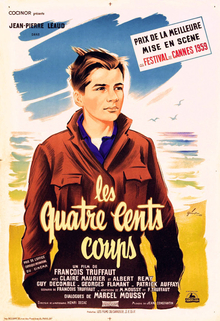
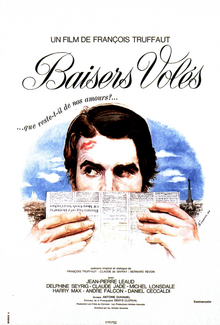
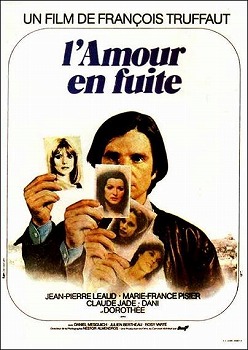
The Adventures of Antoine Doinel - The 400 Blows / Antoine and Colette / Stolen Kisses / Bed and Board / Love on the Run


In September 1958, an advertisement appeared in the French newspaper France-soir for a thirteen year-old boy to play the lead role in an upcoming feature film, The 400 Blows. The director was known in some circles for his controversial film criticism, but had never before directed a feature. The actor eventually chosen was also an amateur, and was initially deemed too old for the part. Yet these two men, Francois Truffaut and Jean-Pierre Léaud, forged a creative partnership and friendship that would last for decades. Incidentally, they also made one of the cornerstones of cinema, a film that kickstarted the French New Wave and ushered in a new era of personal filmmaking.

Looking back today, it hardly seems possible for it to have happened any other way. Rarely has there been such a perfect harmony between actor and director, with each man's personality equally informing the character of Antoine Doinel, who evolved in four sequels. The 400 Blows, rightly, is the most admired, but none of the later Doinel films is without value, and they all play off of motifs established in the first film.

In The 400 Blows, Antoine is a 13 year-old living in Paris with a stressed-out mother and distant stepfather. Neglected at home and vilified by his teacher at school, Antoine spends much of his time wandering through Paris with his friend René - going to movies, carnival rides and parks. Due to a series of poor decisions and misunderstandings at home and school, Antoine resorts to petty crime, and is sent to a seaside camp for juvenile delinquents.

Truffaut said his goal was "not to depict adolescene from the usual viewpoint of sentimental nostalgia, but....to show it as the painful experience it is." His visual style fits the mood - the films is shot in gritty black-and-white, set in cramped apartments, crowded prisons and dirty playgrounds. But the film also captures the excitement of living in the city, the simple pleasures of going to the movies and exploring the city with friends. In one sequence, Antoine goes on a centrifugal carnival ride, and ends up suspended in midair, back against the machine as it spins around. Adults watch from a distance, but Antoine can hardly make them out. It is a striking scene, and one that emphasizes Antoine's uncertain place in the world - stuck between childhood and the world of adults who don't seem to understand him.

Then there is the final scene, one of the most famous in cinema. It shows Antoine as he escapes from his juvenile holding camp. For a few minutes, Truffaut just shows us Antoine running, as he seems to do so often in the series. Then, an exhausted Antoine sees the sea for the first time, wades into the water, and turns to face the audience. The film ends with a zoomed-in freeze frame of Antoine's face. This shot, in some ways, is a miniature of the entire film - an honest, unflinching look at adolescence, freed from all sentimentality and false artifice.

Of all the sequels, Antoine and Colette looks most like The 400 Blows, but announces a departure in terms of tone and mood. This time, Antoine is not an angsty, misunderstood adolescent but a plucky 19 year-old working at a record store in Paris. Antoine is also a regular conertgoer, and it is at one such conert that he meets Colette (Marie-France Pisier), who soon becomes the object of his affections. Antoine tries to woo her, but only manages to charm her parents.

Antoine and Colette (a 30-minute short originally made for the omnibus Love at Twenty) seems downright lightweight compared to The 400 Blows. It maintains the previous film's black-and-white photography and Parisian settings, but the tone is more comic and romantic. That does not mean it is a bad film, for it is certainly an acute and bittersweet portrayal of young love. But it is an intermediary film more than anything, and perhaps too short to fully establish itself.

The romanticism of Antoine and Colette is taken even further in the next installment, Stolen Kisses. This time around, Antoine has been dishonorably discharged from the army, and finds himself on the streets of Paris looking for a job. He eventually finds one in a private detective agency. He also finds love, in the form of an older married woman (Delphine Seyrig) and a charming girl his own age, Christine (Claude Jade).

Stolen Kisses is light, funny, somewhat episodic and mostly irresistible. The success of the movie lies not so much in Truffaut's mise-en-scène but in the charms of the characters and script. It is also the film where Léaud, so arresting as the troubled boy of The 400 Blows, emerges as a full-fledged comedic actor. By this point in the series, you can see how the character evolved from a distillation of Truffaut's troubled childhood to a combination of Truffaut and Léaud's sensibilities. At its most basic level, though, Stolen Kisses is a skillful romantic comedy- whimsical, sentimental, slightly forgettable, but hard not to enjoy.

Bed and Board is my sentimental favorite of the Doinel series, though my perceptions of it are no dobut colored by the circumstances in which I first saw it. I saw both Bed and Board and Love on the Run as a double feature at the Brattle Theatre in Cambridge. As someone largely raised on VHS and DVD, seeing a real film print of a cinema classic is truly a thrill that cannot be replicated at home. In any case, though, there is something more about Bed and Board that makes it rise above the other Doinel sequels. The first half of the film is a domestic comedy that resembles Stolen Kisses in its episodic nature and comedic tone. Much of the film is set in a courtyard where Antoine works selling flowers; his wife Christine works as a violin tutor in their apartment a few floors above. Through a series of vigenttes, Truffaut establishes the supporting characters - a moocher who is constantly asking Antoine for money, a woman who is always hitting on him, a silent, shifty-eyed man deemed "The Strangler" by the apartment residents.

But about halfway into the movie, the tone changes as Antoine begins an affair with a Japanese woman. Up until this point in the series, the movies have relied on the natural likability of the main character. Now the empathy switches to Christine, and Truffaut portrays Antoine as a boy who refuses to grow up. In the centerpiece of the film, a separated Antoine and Christine have a passionate discussion which rapidly changes from a heated argument to a declaration of love. At one point, Christine lashes out against Antoine's desire to have everything his way. On the subject of Antoine's autobiographical novel, she says that "if you use art to settle accounts, it's no longer art." You can almost hear Truffaut's doubts in that statement; he seems to be questioning the artistic value of the entire series. At the very least, he seems fed up with playing the story for laughs, and Bed and Board briefly regains the melancholy tone that made The 400 Blows so powerful.

Consider the end of the scene. A cab arrives to take Christine into the city for a night of shopping. Before she leaves, she senses that Antoine is lonely and asks if he wants to go to a movie. After a few minutes of joking around, Christine gets in the cab and asks Antoine to kiss her, although they have already established that they will not be seeing each other. He does, and in typically melodramatic fashion declares, "You're my little sister, my daughter, my mother." Christine responds with an understated "I'd have liked to be your wife too."

This scene alone reveals what a terrific writer Truffaut was; it is an emotional rollercoaster ride in which the confused emotions of the main characters keep bubbling to the surface, threatening to obscure their best intentions to stay away from each other. It may be true, as it is frequently claimed, that by this point in his career Truffaut had abandoned the experimental, avant-garde nature of his early work for a more traditional style. But he never gave up the humanism that made his work so moving and so accessible to so many people. There are no flashy camera tricks or showy editing techniques in Bed and Board. It is purely minimalist, and extremely effective at that. All that needs to be said about Antoine's regret is shown in the shot where Christine's cab pulls away and Antoine walks down a lonely street into a brothel.

Bed and Board was originally intended to be the final Antoine Doinel film, and in retrospect it probably should have been. At times, Love on the Run seems like a clipshow; it features numerous flashbacks to all the previous films, which only makes it seems slight in comparison. It also seems altogether too tidy, with every aspect of Antoine's life coming together to create a happy ending. Finally, Love on the Run is a retreat from the serious reflection of Bed and Board, reverting back to the comedic situational comedy of Stolen Kisses.

The film is helped a great deal by the return of Colette's character; the actress Marie-France Pisier infuses the film with much-needed warmth. The style of the film is also noteworthy - the editing is quick and forceful, featuring swift cutaways and fast zooms. But the story is ultimately where the film falls apart. Antoine's love interest, Sabine, hardly establishes a personality of her own, and there is a genuine lack of new, interesting material.

Despite the final film's shortcomings, the Antoine Doinel series really is a remarkable piece of work. It is too easy to dismiss the sequels to The 400 Blows as sentimental fluff, but this is simply not the case. Watching the entire series, you can trace the evolution of Antoine Doinel not only in terms of plot, but in the sensibilities of his creators. You can also see the whole series as an examination of the fine line between adolescence and adulthood. Or you can simply get caught up in the story, in the acute feelings that Truffaut's films so effortlessly exude. No matter how you look at it, The Adventures of Antoine Doinel is a success.

Ratings (out of 4 stars)
The 400 Blows: ****
Antoine and Colette: ***
Stolen Kisses: ***
Bed and Board: ****
Love on the Run: **1/2

Saturday, September 12, 2009

Breaking my own rule

I know, I know. After only a few weeks, I've already broken my goal of posting one blog a week. The simple fact is that I had no conception of how time consuming my summer reading and summer work would be. And now that school has started it's even more hectic. However, in my spare time I will try to write as many reviews as possible. The long-delayed post on Truffaut's Antoine Doinel series is coming up next, though I'm not sure exactly when. Stay tuned, and thanks for your patience!

Thursday, August 27, 2009

Inglourious Basterds (2009)


The opening scene of Quentin Tarantino's Inglourious Basterds is so tense, so disquieting, so rife with real human drama that I almost assumed that Tarantino would try something different with this latest film. In this scene and a handful of others scattered across the film, Tarantino's trademark dialogue sounds more subdued and realistic than usual, and he demonstrates his skill at orchestrating tension followed by sudden releases of violence. But the film soon dissolves into an overlong, self-indulgent, violence-glorifying mess, filled with so many film references that one wonders if there is an original thought in the whole film. In short, Inglourious Basterds is just like every other movie Tarantino has made.

The titular Basterds are led by Lt. Aldo Raine (Brad Pitt, in an amusing turn), a soldier from Tennessee whose squad is intent on "doing one thing, and one thing only - killing Nazis." The Basterds eventually get involved with a plot by the British army to blow up a Parisian cinema during the premiere of Joseph Goebbel's new film, which Hitler and the top-ranking Nazis will be attending. The cinema is run by Shoshanna (Mélanie Laurent), a Jew who escaped death at the hands of SS Colonel Hans Landa (Christoph Waltz). Unbeknowst to the Basterds, Shoshanna has her own plot to kill the Nazis.

Inglourious Basterds is a perfect example of a film that is less than the sum of its parts. The ensemble cast - assembled from America, France, and Germany - is terrific. Christoph Waltz in particular is a standout, delivering an alternately funny and terrifying performance as Landa, "the Jew Hunter." The period production design and costuming is exquisite, and Tarantino's eye for composition is undeniable. I keep returning to one inventive shot late in the film, when a shot of a laughing woman's face projected onto a burning movie screen becomes like a ghostly apparition.

But in the end, Inglourious Basterds falls apart due to Tarantino's excesses. The script is unwieldy, with several scenes dragging on far too long. More importantly, Tarantino never establishes a tone, and the film bizarrely shifts from war drama to farce to action movie to parody. There seems to be no unifying vision behind the film, unless it's another opportunity for Tarantino to throw together a bunch of disparate genres and loosely attach them to a storyline. Francois Truffaut once said that a movie must simultaneously express an idea about cinema and an idea about life. Tarantino's films have never bothered with real life, and indeed his movies can often be reduced to a list of their influences, ranging from Jean-Luc Godard to Sergio Leone.

More than anything, Inglourious Basterds reveals what an immature filmmaker Tarantino is. It seems to me that the film possesses no higher artistic goal than to watch Jews beat up Nazis real good. By the final scenes, in which we are treated to close-ups of Nazis being pelleted in the face with machine guns, I felt sickened and numb. Tarantino's films, I think, are essentially escapist entertainment, but his violence is often so graphic that you feel repulsed rather than entertained.

There may have been a time when Tarantino's combination of violence and humor, and his mishmashing of various genres, seemed original. Now it is tired and stale, the product of a director who refuses to grow up. It remains to be seen whether Tarantino will ever put aside his B movies, stop wallowing in his own cleverness, and make a movie that actually means something.

Verdict: **/****

DVD Recommendation: If you want a refreshing antidote to Tarantino, check out Martin McDonagh's In Bruges. That film is as violent, funny, and profane as anything Tarantino has done, but its characters are real people and not broad caricatures. It features a twisty, unpredictable script and the surprisingly effective comic duo of Brendan Gleeson and Colin Farrell. Also check out my brother Matt's excellent blog post about the movie and the differences between McDonagh and Tarantino.

Monday, August 24, 2009

Quick update

Followers of this blog have probably noticed by now that my output has been much smaller lately, having only written three posts this summer. I suppose I could attribute this to my time commitments - at my internship, camp, and driver's ed among other things. But that would not be entirely truthful; general laziness is more to blame. I have been so caught up with watching as many movies as possible that writing about them has taken a backseat. In an effort to remedy that, I am setting a goal of one post a week. I hope this will help me to be more consistent!

Stay tuned later this week for a review of Truffaut's The Adventures of Antoine Doinel. I also intend to broaden this blog, including director retrospectives and other articles in addition to the regular movie reviews. And since I have never been entirely happy with the A-F rating scale, I might adopt a new one or simply not use any rating system. In the meantime, feel free to comment on my posts as it is encouraging to know that someone is reading. I welcome any comments, criticisms, and suggestions.

Wednesday, August 12, 2009

Network (1976)


Sidney Lumet's Network, like The Graduate, is a genre-bender of such generational importance and undeniable power that it is at first easy to overlook its flaws. Most of these trace back to Paddy Chayefsky's script, one of the most acclaimed in American film. It is an astute and prescient satire of American culture, yes, but it also has the unfortunate tendency to devolve into caricature and a lot of speechifying.

Network focuses on the fictional, lowly-rated television network UBS. When longtime, washed-up news anchor Howard Beale (Peter Finch) is fired, he announces on the air that he will kill himself. The controversy attracts much attention, so Beale is exploited and reinvented as "the mad prophet of the airwaves." Max Schumacher (William Holden), Beale's longtime friend and colleague, is fired and replaced by programmers Diana Christensen (Faye Dunaway) and Frank Hackett (Robert Duvall), who will stop at nothing to get high ratings.

What is admirable about Network is the prophetic nature of its satire. Many things about Network are unbelievable, but the trashy Howard Beale Show looks more and more familiar every year. Years ahead of his time, Chayefsky seems to have predicted today's profusion of tawdry talk shows and mindless reality TV. And yet he is not so naive as to assume that things were ever entirely different. The film's moral center is Max Schumacher, Holden's character, who fancies himself an emblem of respectable journalism. Yet even he goes along with the Beale hysteria at first, only protesting when he is fired. No one is let off the hook in Network - least of all the TV viewers themselves, who are portrayed as passive, complacent players in the whole machine. An extremely cynical view, yes, but one the film expresses quite cleverly. In the movie's most famous scene, young people from all across the country, prompted by Beale's mad ramblings, yell out the window that they're "mad as hell and not going to take it anymore," a line regurgitated by an eager audience before each taping of the show. It is a frightening scene, and one that perfectly expresses how the masses can get behind a mindless catchphrase while thinking they are saying something meaningful.*

That is a skillful device, but much of Chayefsky's script suffers from a lack of such invention. Rather, he resorts to characters dishing out carefully worded monologues. Mind you, they sound great - until you realize that no one speaks that way in person. Chayefsky's script also suffers from tonal inconsistency, bouncing somewhat incongruously from satire to farce to drama. And many of his supporting characters are goofy caricatures; actors like Peter Finch, Ned Beatty, and Robert Duvall have little to do but rant and rave. The only actors who manage to give fully rounded performances are Faye Dunaway, William Holden, and Beatrice Straight in a small role as Holden's wife. Holden, especially, is terrific, injecting his role with sarcastic bite while remaining a likable, flawed character who is fully aware of his faults and limitations.

If there is one person who elevates Network to something greater than the sum of its parts, I am convinced it is Sidney Lumet. The director lacks any obvious auteurist touches, but as with 12 Angry Men, he does a superb job of building dramatic tension. Network also reveals that Lumet has a talent for comedy, and he never lets the film become too self-important. Finally, Lumet and his cinematographer Owen Roizman create a series of memorable images, from the famous "mad as hell" scene to the final, indicting shot.

In the end, the overall effect of Network is so powerful that its many imperfections almost seem not to matter. In one of the film's most affecting scenes, Holden asks Dunaway to love him, "primal doubts and all." She cannot accept him that way, but I embrace Network, inherent flaws and all.

Verdict: B+

*I don't mean to get political, but I keep thinking of this video.

Monday, July 20, 2009

The Searchers (1956)


Of all the canonical classics of American cinema, few are as highly disputed as The Searchers. It has been called the "Great American Film," and a generation of filmmakers, critics, and moviegoers have imbued it with an almost mythic stature. Yet a new generation of moviegoers have questioned its reputation, focusing on its perceived racism and jarring variations in tone. I find the accusations of racism hard to fathom, though The Searchers is far from politically correct. However, The Searchers is flawed in several important ways, most of them tracing back to the script.

As the film begins, crusty Civil War veteran Ethan Edwards (John Wayne) arrives at his brother Aaron’s ranch in Texas. Shortly afterwards, a Comanche raid leaves all but Aaron’s two daughters killed. Ethan sets off with a search party to rescue the two girls, but soon all have abandoned the quest except for Ethan and Martin Pawley (Jeffrey Hunter), Aaron’s adopted son. As the years go by, the racist Ethan becomes intent upon killing the lone survivor, Debbie, believing that after years of living with Indians she is beyond saving.

This central arc of The Searchers is compelling, but unfortunately screenwriter Frank S. Nugent surrounds it with a meandering romantic subplot. In several scenes, Jeffrey Hunter and Vera Miles play out a contrived romance which only serves to distract from the main story. Nugent’s script is also flawed in its treatment of the supporting characters, most of whom are caricatures being played for laughs. The comedy often sinks quite low – in fact, a big joke is made out of a large Indian woman being kicked down a hill. The script is altogether too comic, a flaw which often undermines the film’s suspense and the film’s tone in general.

What cannot be argued with, though, is John Ford’s superb direction. Monument Valley, no doubt a stunning vista on its own, becomes even more breathtaking when filtered through Ford’s discerning camera. Few films capture so well the beauty and breadth of the natural world, along with the inherent dangers that go with it. Ford also displays his skill for choreographing exciting and suspenseful action sequences. It is no surprise to see how often the film’s shots are quoted, in films ranging from Star Wars to Lawrence of Arabia to Kill Bill.

Yet Ford’s skill does not lie only in the cinematography. He takes a rather conventional Western script and draws out universal themes like obsession and the nature of heroism. This is done completely without pretension, and Ford never seems to stretch to lofty artistic ambitions. The Searchers reveals what a master Ford is, as he simultaneously delivers an entertaining Western movie and elevates it to something far more lyrical.

Still, I cannot pretend that The Searchers is the masterpiece that so many claim. I think the film's supporters tend to ignore the buffoonery of the supporting characters and the many imperfections of the script. It is one of the landmark Westerns, no doubt (though I prefer both My Darling Clementine and The Man Who Shot Liberty Valance). But one of the greatest films ever made? That'll be the day.

Verdict: B