Showing posts with label foreign. Show all posts

Saturday, July 31, 2010

Sunrise (1927)

Quick trivia question: what was the first Academy Award winner for Best Picture? The official answer is 1927's Wings, directed by William A. Wellman. But in fact, there were two winners that year: Wings won for "Best Production" but F.W. Murnau's Sunrise won for "Unique and Artistic Production." Over time, the dichotomy between those two films has grown even sharper: Wings, a romantic, expensive World War I spectacle, has all but receded from memory - or to be more accurate, is more remembered in name than for its artistic merits. Sunrise, on the other hand, was largely ignored by audiences upon its initial release, but has since become a film school staple and is widely regarded as one of the greatest films ever made. Indeed, the greatness of Sunrise lies not only in its importance to film history - for combining the sensibilities of German and American filmmaking, and for its array of innovative visual and aural effects - but also in its sheer beauty. This is not a stuffy old silent film, but one of the most ravishing and lyrical films I know.

To summarize Sunrise is to trivialize it. The film involves three main characters: The Man (George O'Brien), The Wife (Janet Gaynor), and The Woman from the City (Margaret Livingston). The Man is a farmer who begins an affair with The Woman, who then convinces him to drown his wife. The Man brings his wife out on a boat to do the deed, but cannot go through with it. The rest of the film concerns The Man's attempt to repair and renew his relationship with The Wife.

Right down to the lack of character names, Sunrise has the potential for a simplistic, treacly allegory. That it is something more is above all a tribute to F.W. Murnau. Murnau was one of the most significant pioneers of German Expressionism - a bold, exaggerated style that utilized high contrast cinematography, oblique angles, and shadows to great effect. It was a style most famously used in horror (Nosferatu, The Cabinet of Dr. Caligari) and sci-fi (Metropolis); it also provided part of the inspiration for American film noir. Sunrise does not sound like it would need this kind of treatment. But Murnau uses it to explore the dark side of its protagonist's heart.
Murnau's visual style in the opening and closing scenes - looming shadows, canted angles, and dimly lit shots - reflect The Man's estrangement from his wife, and his tortured sense of guilt. At the beginning of the movie, this estrangement is out of choice; The Man chooses to abandon his wife to elope with another woman. By the end of the movie, the two have reconciled, but after a fateful storm, The Man believes he has lost his wife forever. In shots like the one below, Murnau seems to suggest that without his wife, The Man is quite literally a shadow of his former self.Murnau's visual mastery also extends to his use of superimpositions. Several times throughout the film, Murnau uses these layered images to explore the characters' dreams, hopes, feelings, fears, and nightmares. This kind of effect could be cooked up easily today, but in Murnau's time, it was a painstaking process. Whatever the limitations of the technology, though, the superimpositions still hold up today as evocative, sensuous, telling images.
I've barely scratched the surface of Murnau's innovations. I could also point to his roving camera, in an era when cameras were bulky and usually kept stationary. I could mention his use of Movietone, an early soundtrack system, to include not only a classical film score but also numerous sound effects. But the real genius of Murnau's film is how seamlessly these techniques are woven into the fabric of the story. His direction is never intrusive or distracting, and he knows when to simply pull back and observe. During the long reconciliation scene, Murnau leaves most of the heavy lifting to his wonderful, expressive actors.

I'm reluctant to call any film perfect, but Sunrise comes as close as any film I've seen. The movie was initially overshadowed by movies like Wings as well as The Jazz Singer, the first talkie, released the same year. Within a few years, silent films would be all but obsolete in Hollywood. Yet Sunrise reveals all the possibilities of that medium, and achieves a level of purity and simplicity that few films can claim. With silent films as great as this, who needs sound anyway?

Coming soon to the blog: a trio of Nicholas Ray films!

Wednesday, April 21, 2010

The Human Condition (1959-1961)


Masaki Kobayashi's The Human Condition is exactly what it sounds like - a long, sprawling, grandiose epic about war and heroism and patriotism and humanity and a whole variety of other things. Unsurprisingly, it is overlong and overambitious. More surprisingly, it is often a bore. The first film in the trilogy is at least engaging as a conventional war story and character study, but the second and third parts become so prolonged and predictable that when the trilogy finally stopped in its tracks, nine and a half hours after it started, I had lost interest. There is a lot of money thrown at the screen, and a lot of speechifying, and many pretty widescreen vistas. But none of that can hide the film's lack of a meaningful insight into any of the themes it considers.

The Human Condition
was originally released as three films, each about three hours long. In Part 1, we are introduced to the protagonist, Kaji (Tatsuya Nakadai), a young management trainee who gets appointed to the position of a labor camp supervisor in Manchuria during World War Two. There, he tries to implement his socialist ideals in the treatment of the workers, but is opposed by an immoral and rigidly bureaucratic military system. In Part Two, Kaji becomes a soldier in the Imperial Army and is sent to the front lines. In Part Three, a disillusioned Kaji deserts in order to return to his wife Michiko (Michiyo Aratama).

If that plots sounds awfully tidy, it's because it is. From very early on, we know where this is heading. The film follows a linear decline: as time progresses, Kaji's circumstances become more dire, he becomes increasingly cynical, and the film's mood becomes all the more somber, its tone all the more self-serious. Even with nine and a half hours to spare, Kobayashi finds little time to develop his characters in any but the most basic ways. Kaji does change over the course of the trilogy, but his development seems perfunctory, always at the service of the plot and Kobayashi's grand thematic aspirations. The films were based on a six-part novel, and apparently Kobayashi was so enamored of it that he cut almost nothing from the book. But his slavish devotion to the arc of the novel doesn't give the film any room to breathe.

On a technical level, The Human Condition is somehow less than the sum of its parts. Kobayashi hired a new cinematographer, Yoshio Miyajima, specifically for the film. He also employed a then-innovative widescreen film format called Grandscope. Kobayashi's direction is clean and clear, but also rather dull. The camera seems to merely record the action. There are many wide shots of landscapes, but one gets the impression that Kobayashi and Miyajima are merely straining for grandeur; the shots lack depth and meaning. In terms of music, Kobayashi lays it on pretty thick, employing loud, bombastic swells to call our attention to anything particularly dramatic.

For a while, The Human Condition gets by on the strength of its cast. As Kaji, Nakadai is eminently likable, and convincing in his descent from sincere idealist to disillusioned cynic. Aratama, playing his wife, is equally good in what could have been a thankless supporting role. These two actors keep the audeience interested, even as the plot follows its all-too-predictable course.

The Human Condition is perhaps most interesting as a social and political document. Released 15 years after the end of World War two, the film - which depicts the entire Japanese army as a corrupt and outdated institution - was enormously popular in Japan. That says a lot about the nation's postwar attitude. The film's existential concerns also clarify why it was so popular; such themes were the staple of 60's "arthouse" cinema.

Still, the fact that the film's social and political context is its most interesting aspect suggests a larger truth - that over time, The Human Condition has become dated and esoteric rather than universal. Kobayashi's literal-minded and heavy-handed apporach to the film renders it curiously unaffecting. It seems to me the Japanese equivalent of a particularly overwrought Hollywood epic, or maybe a Japanese imitation of a David Lean film. Perhaps the only reason why this film is so revered, why the critic David Shipman called it "unquestionably the greatest film ever made," is that it comes dressed up in subtitles and a long running time, making it seem worth more than it really is.

Sunday, September 20, 2009

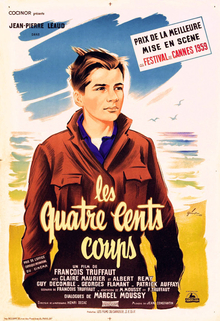
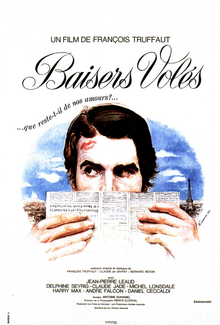
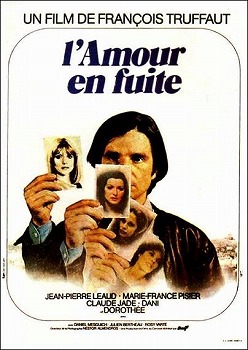
The Adventures of Antoine Doinel - The 400 Blows / Antoine and Colette / Stolen Kisses / Bed and Board / Love on the Run


In September 1958, an advertisement appeared in the French newspaper France-soir for a thirteen year-old boy to play the lead role in an upcoming feature film, The 400 Blows. The director was known in some circles for his controversial film criticism, but had never before directed a feature. The actor eventually chosen was also an amateur, and was initially deemed too old for the part. Yet these two men, Francois Truffaut and Jean-Pierre Léaud, forged a creative partnership and friendship that would last for decades. Incidentally, they also made one of the cornerstones of cinema, a film that kickstarted the French New Wave and ushered in a new era of personal filmmaking.

Looking back today, it hardly seems possible for it to have happened any other way. Rarely has there been such a perfect harmony between actor and director, with each man's personality equally informing the character of Antoine Doinel, who evolved in four sequels. The 400 Blows, rightly, is the most admired, but none of the later Doinel films is without value, and they all play off of motifs established in the first film.

In The 400 Blows, Antoine is a 13 year-old living in Paris with a stressed-out mother and distant stepfather. Neglected at home and vilified by his teacher at school, Antoine spends much of his time wandering through Paris with his friend René - going to movies, carnival rides and parks. Due to a series of poor decisions and misunderstandings at home and school, Antoine resorts to petty crime, and is sent to a seaside camp for juvenile delinquents.

Truffaut said his goal was "not to depict adolescene from the usual viewpoint of sentimental nostalgia, but....to show it as the painful experience it is." His visual style fits the mood - the films is shot in gritty black-and-white, set in cramped apartments, crowded prisons and dirty playgrounds. But the film also captures the excitement of living in the city, the simple pleasures of going to the movies and exploring the city with friends. In one sequence, Antoine goes on a centrifugal carnival ride, and ends up suspended in midair, back against the machine as it spins around. Adults watch from a distance, but Antoine can hardly make them out. It is a striking scene, and one that emphasizes Antoine's uncertain place in the world - stuck between childhood and the world of adults who don't seem to understand him.

Then there is the final scene, one of the most famous in cinema. It shows Antoine as he escapes from his juvenile holding camp. For a few minutes, Truffaut just shows us Antoine running, as he seems to do so often in the series. Then, an exhausted Antoine sees the sea for the first time, wades into the water, and turns to face the audience. The film ends with a zoomed-in freeze frame of Antoine's face. This shot, in some ways, is a miniature of the entire film - an honest, unflinching look at adolescence, freed from all sentimentality and false artifice.

Of all the sequels, Antoine and Colette looks most like The 400 Blows, but announces a departure in terms of tone and mood. This time, Antoine is not an angsty, misunderstood adolescent but a plucky 19 year-old working at a record store in Paris. Antoine is also a regular conertgoer, and it is at one such conert that he meets Colette (Marie-France Pisier), who soon becomes the object of his affections. Antoine tries to woo her, but only manages to charm her parents.

Antoine and Colette (a 30-minute short originally made for the omnibus Love at Twenty) seems downright lightweight compared to The 400 Blows. It maintains the previous film's black-and-white photography and Parisian settings, but the tone is more comic and romantic. That does not mean it is a bad film, for it is certainly an acute and bittersweet portrayal of young love. But it is an intermediary film more than anything, and perhaps too short to fully establish itself.

The romanticism of Antoine and Colette is taken even further in the next installment, Stolen Kisses. This time around, Antoine has been dishonorably discharged from the army, and finds himself on the streets of Paris looking for a job. He eventually finds one in a private detective agency. He also finds love, in the form of an older married woman (Delphine Seyrig) and a charming girl his own age, Christine (Claude Jade).

Stolen Kisses is light, funny, somewhat episodic and mostly irresistible. The success of the movie lies not so much in Truffaut's mise-en-scène but in the charms of the characters and script. It is also the film where Léaud, so arresting as the troubled boy of The 400 Blows, emerges as a full-fledged comedic actor. By this point in the series, you can see how the character evolved from a distillation of Truffaut's troubled childhood to a combination of Truffaut and Léaud's sensibilities. At its most basic level, though, Stolen Kisses is a skillful romantic comedy- whimsical, sentimental, slightly forgettable, but hard not to enjoy.

Bed and Board is my sentimental favorite of the Doinel series, though my perceptions of it are no dobut colored by the circumstances in which I first saw it. I saw both Bed and Board and Love on the Run as a double feature at the Brattle Theatre in Cambridge. As someone largely raised on VHS and DVD, seeing a real film print of a cinema classic is truly a thrill that cannot be replicated at home. In any case, though, there is something more about Bed and Board that makes it rise above the other Doinel sequels. The first half of the film is a domestic comedy that resembles Stolen Kisses in its episodic nature and comedic tone. Much of the film is set in a courtyard where Antoine works selling flowers; his wife Christine works as a violin tutor in their apartment a few floors above. Through a series of vigenttes, Truffaut establishes the supporting characters - a moocher who is constantly asking Antoine for money, a woman who is always hitting on him, a silent, shifty-eyed man deemed "The Strangler" by the apartment residents.

But about halfway into the movie, the tone changes as Antoine begins an affair with a Japanese woman. Up until this point in the series, the movies have relied on the natural likability of the main character. Now the empathy switches to Christine, and Truffaut portrays Antoine as a boy who refuses to grow up. In the centerpiece of the film, a separated Antoine and Christine have a passionate discussion which rapidly changes from a heated argument to a declaration of love. At one point, Christine lashes out against Antoine's desire to have everything his way. On the subject of Antoine's autobiographical novel, she says that "if you use art to settle accounts, it's no longer art." You can almost hear Truffaut's doubts in that statement; he seems to be questioning the artistic value of the entire series. At the very least, he seems fed up with playing the story for laughs, and Bed and Board briefly regains the melancholy tone that made The 400 Blows so powerful.

Consider the end of the scene. A cab arrives to take Christine into the city for a night of shopping. Before she leaves, she senses that Antoine is lonely and asks if he wants to go to a movie. After a few minutes of joking around, Christine gets in the cab and asks Antoine to kiss her, although they have already established that they will not be seeing each other. He does, and in typically melodramatic fashion declares, "You're my little sister, my daughter, my mother." Christine responds with an understated "I'd have liked to be your wife too."

This scene alone reveals what a terrific writer Truffaut was; it is an emotional rollercoaster ride in which the confused emotions of the main characters keep bubbling to the surface, threatening to obscure their best intentions to stay away from each other. It may be true, as it is frequently claimed, that by this point in his career Truffaut had abandoned the experimental, avant-garde nature of his early work for a more traditional style. But he never gave up the humanism that made his work so moving and so accessible to so many people. There are no flashy camera tricks or showy editing techniques in Bed and Board. It is purely minimalist, and extremely effective at that. All that needs to be said about Antoine's regret is shown in the shot where Christine's cab pulls away and Antoine walks down a lonely street into a brothel.

Bed and Board was originally intended to be the final Antoine Doinel film, and in retrospect it probably should have been. At times, Love on the Run seems like a clipshow; it features numerous flashbacks to all the previous films, which only makes it seems slight in comparison. It also seems altogether too tidy, with every aspect of Antoine's life coming together to create a happy ending. Finally, Love on the Run is a retreat from the serious reflection of Bed and Board, reverting back to the comedic situational comedy of Stolen Kisses.

The film is helped a great deal by the return of Colette's character; the actress Marie-France Pisier infuses the film with much-needed warmth. The style of the film is also noteworthy - the editing is quick and forceful, featuring swift cutaways and fast zooms. But the story is ultimately where the film falls apart. Antoine's love interest, Sabine, hardly establishes a personality of her own, and there is a genuine lack of new, interesting material.

Despite the final film's shortcomings, the Antoine Doinel series really is a remarkable piece of work. It is too easy to dismiss the sequels to The 400 Blows as sentimental fluff, but this is simply not the case. Watching the entire series, you can trace the evolution of Antoine Doinel not only in terms of plot, but in the sensibilities of his creators. You can also see the whole series as an examination of the fine line between adolescence and adulthood. Or you can simply get caught up in the story, in the acute feelings that Truffaut's films so effortlessly exude. No matter how you look at it, The Adventures of Antoine Doinel is a success.

Ratings (out of 4 stars)
The 400 Blows: ****
Antoine and Colette: ***
Stolen Kisses: ***
Bed and Board: ****
Love on the Run: **1/2

Tuesday, June 9, 2009

Persona (1966)


If there were ever a definitive answer to what Persona all meant, I would not want to hear it. Countless theories have tried to make sense of its enigmatic characters, of its surreal, seemingly random images, and of just what Ingmar Bergman was trying to say. Wisely, Bergman never commented on the film's meaning, preferring to let the film speak for itself. And so it does, 43 years after the fact. Persona is more disturbing than most horror films, more emotionally devastating than most dramas, and altogether more satisfying than almost any film I have seen.

The setup for this complex film is deceptively simple. Alma (Bibi Andersson) is a young nurse assigned to take care of Elisabet Vogler (Liv Ullmann), an actress who one day stopped talking after a performance. As Alma's superior informs her, there is nothing physically or mentally wrong with Elisabet - she just refuses to speak. Alma is ordered to look after Elisabet at an isolated seaside home for the summer. Alma at first enjoys their time together, but as she spills more and more of her private life, Alma begins to break down.

"The human face is the great subject of the cinema. Everything is there." Bergman himself said that, and Persona is perhaps the greatest expression of this belief. The startling cinematography, by Sven Nykvist, often lingers on the actresses' faces in long, revealing close-ups. At other times, he frames shots so that the two actresses seem to be mirror images of each other, on opposite sides of the frame. Nykvist and Bergamn also constantly experiment with light and shadow, background and foreground. As a result, every shot looks gorgeous - and not just superficially, either, for this is a film in which every shot reflects, on an aesthetic level, the film's themes. The most dramatic example comes at the film's climax, when Bergman fuses the two women's faces together in an expression of how the characters' personalities have merged.

None of this would matter, of course, if it weren't for the actresses, who play off each other in consistently fascinating ways. Ullman is a tranquil, ethereal presence as the silent Elisabet. Andersson is equally brilliant as Alma, who initially comes off as composed and controlled, but is in fact full of doubts and insecurities. In one of the film's most famous scenes, Alma tells Elisabet about a sexual encounter she had with two strange boys at a beach. Bergman pulls no punches with describing the graphic details, and Andersson is compelling as her character confronts her guilt over aborting the child that resulted. Indeed, the film is full of such darkly compelling monologues. One, spoken by Alma near the end of the film, is actually spoken twice - once, with the camera focused on Elisabeth, and once with the camera focused on Alma. This seems tedious at first, but it serves the useful purpose of showing how inseparable these two women's experiences are.

This may all sound like pretentious, pseudo-psychological nonsense, but I assure you that Persona is nothing of the sort. Bergman's film may be ambiguous, but it is not esoteric. Persona is a true joy to watch, enveloping us in its spell. From the very first frame, I was utterly captivated by the film - so much so that I watched it again two days later with the same fascination. I also recently watched Michelangelo Antonioni's Blowup, and was struck by how dated and stuffy it seemed in comparison - more of an intellecutal exercise than a fully formed film. Persona never lets its ideas stifle its emotions, and it is without a doubt one of the most beautiful films I have ever seen. Indeed, on every single front, Persona is that rare film that reminds you of everything that cinema can be.

Verdict: A+

Saturday, January 31, 2009

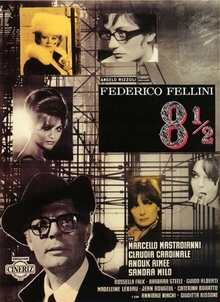
Double Feature: Day for Night (1973) / 8 1/2 (1963)


“I demand that a film express either the joy of making cinema or the agony of making cinema. I am not at all interested in anything in between; I am not interested in all those films that do not pulse.”

So said François Truffaut, the renowned French director of such films as The 400 Blows and Jules and Jim. In addition to being one of cinema’s greatest artists, he was also one of its greatest patrons. Truffaut began his career as a film critic, and according to those who knew him, he had an encyclopedic knowledge of films and an unadulterated love for the filmmaking process. That love comes across in his 1973 film Day for Night, which examines the family dynamic that forms between the cast and crew of a lightweight studio film named Meet Pamela. An interesting counterpoint is Federico Fellini’s 8 ½, about a director whose long-in-development film leaves his personal life in ruin. Upon first glance, it would appear that the two films are polar opposites, but both films “pulse” with a creative energy and the joy of cinema that Truffaut was so adamant about.

Every frame of Day for Night is bursting with love for the movie-making process. Truffaut plays Ferrand, the director of the studio comedy Meet Pamela. Jean-Pierre Leaud is Alphonse, the temperamental young star. Jacqueline Bisset plays Julie, a slightly unstable actress who has the title role in Meet Pamela. Truffaut fills out his film with other movie types – the aging supporting actress, the script girl, and various crew members.

Day for Night takes the form of a series of vignettes rather than a developed narrative, giving us a fly-on-the-wall look at life on a movie set. We observe the crew film a busy crowd scene, a car chase stunt, a simple dining room scene, and all the while we pick up on various film-making techniques. We share in the frustrations of the crew, as a cat refuses to lap up milk on cue, or as the aging actress Severine stumbles over her lines. Off set, we witness the relationships that develop among the cast and crew – friendships, romances, flings. All the while, the cast and crew are seen as a family, who share good times and console each other during bad ones.

The center of the film, though, is Ferrand, played by Truffaut as a version of himself. Truffaut once said that when he first saw Citizen Kane, he realized that he had never loved anyone as much as that film. The same would certainly be true of Ferrand, who remains doggedly fixated on making his movie above all else. To be sure, Ferrand develops friendships with his actors, and is never emotionally distant. Yet when Ferrand tries to console Alphonse after a romance gone wrong, his advice is to focus on learning his lines, because “people like you and me are only happy in our work.” That is one of the film’s strongest scenes, and it exemplifies what is so compelling about Day for Night. Not only is Truffaut’s adoration of cinema infectious, but the movie is filled with truthful human relationships.

Federico Fellini’s 8 ½ is also ostensibly about the making of a movie, but it is not really a film about film in the way that Day for Night is. The protagonist of 8 ½ is Guido (Marcello Mastroianni), a celebrated director whose film and life are crumbling around him. On vacation at a resort spa along with his producers, writer, and potential stars, Guido is hounded from all sides by people who are telling him how to make his film. The truth is, Guido doesn’t know what film he wants to make, and he finds solace in drifting into his childhood memories and his fantasies, embodied by a luminous Claudia Cardinale as the woman of his dreams. At the same time, Guido has to compete with the real women in his life – his mistress Carla (Sandra Milo) and jealous wife Luisa (Anouk Aimee).

8 ½ is remarkable on many levels. Fellini’s film weaves seamlessly between reality and fantasy, past and present without seeming at all heavy-handed. Unlike Guido, Fellini is in full command of his craft, and each segment builds upon the last to create a fuller portrait of Guido. That is not to say that every single shot or symbol makes sense. In one bizarre outdoors scene, Fellini pans past a group of characters who smile directly into the camera, and move in perfect synchronization as if they are in a sort of dance. There is no apparent reason for this, except that Fellini, ever the visual stylist, thought it looked interesting. That is not a criticism, but rather an example of how Fellini refused to follow conventions, constantly experimenting with structure and movement and composition. The film was originally titled The Beautiful Confusion, and that is exactly what it is. Even when we don’t fully understand Fellini’s intentions, his masterful direction and Gianni de Venanzo lush black-and-white photography keep the audience fully involved.

I have probably made 8 ½ sound far too esoteric, but it is really quite an entertaining movie. Fellini kept a note attached to his camera that read “Remember, this is a comedy.” Indeed, it is a rather broad comedy at times. One of the film’s most memorable sequences is a dream envisioned by Guido, who imagines a harem filled with all of the women in his life. They dote upon him, giving him baths, washing his home and preparing dinner. In another scene, Guido remembers as a schoolboy visiting the severely overweight Saraghina (Eddra Gale), a prostitute who does a grotesque and hilarious dance on the beach.

Despite these comic scenes, though, I would not generally characterize 8 ½ as a comedy. Guido spends most of the film in an unhappy state, only taking comfort in his dreams and fantasies. Only in the end does Guido find happiness, as he abandons his movie and decides to pick up the scattered pieces of his life. “Life is a celebration,” Guido tells his wife Luisa, “let’s live it together!” Fellini, unlike Truffaut, seems to be concluding that life is more important than film. And yet Day for Night and 8 ½ are not at all incompatible; both emphasize the joy of making cinema in their own way. Truffaut points out the simple pleasures of movie-making, the day-to-day gratifications of being on a set. And Fellini, through the creation of 8 ½, shows us that he is an artist of the first order, using the tools of his trade to examine the pieces of a man’s life – a beautiful confusion indeed.

Day for Night: A
8 ½: A+

Monday, January 19, 2009

Three Colors Trilogy: Blue/White/Red (1993-1994)


The three colors in Krzysztof Kieslowski's Three Colors trilogy are said to represent the colors of the French flag, and the values they stand for - blue (liberty), white (equality), and red (fraternity). But the trilogy is about as apolitical a work as one can imagine. The three values are examined from an emotional, not a political standpoint. Like Kieslowski’s The Decalogue, a series of ten hour-long films examining each of the Ten Commandments, the Three Colors trilogy explores the meaning of a traditional set of values in the modern world. Seen on their own, the films stand up as rich and fascinating character studies. But the trilogy is greater than the sum of its parts, and ultimately emerges as a beautiful and haunting work – despite some missteps.

Blue tells the story of Julie (Juliette Binoche), whose husband (a famous composer) and daughter are killed in a car crash at the beginning of the film. Julie decides to break off any connection to her past life, abandoning her home and moving to a Paris apartment. In White, a Polish man named Karol Karol (Zbigniew Zamachowski) is divorced and abandoned by his French wife of six months, Dominique (Julie Delpy). He eventually returns to post-communist Poland, rebuilds his life, and becomes determined on seeking revenge. Red closes out the trilogy with the story of an unlikely friendship that forms between a kindhearted young model (Irène Jacob) and a cynical old judge (Jean-Louis Trintignant).

Blue begins the trilogy with a bang - a purely figurative one, though, since Blue is a very quiet, subtle, and somber film. There is no “plot” to speak of, other than the set up in which Julie loses her family in a car crash. Rather, Kieslowski gives us an almost first-person look into Julie’s life, without providing any exposition. She is an intriguing character from the start precisely because we do not understand her. Why can she not carry on with her suicide attempt? Why does she sleep with her husband’s colleague only days after her release from the hospital? Why does she decide to toss away her husband’s last great work, a piece of music he was writing for a prestigious European concert? These kinds of questions propel Blue, and Binoche’s ambiguous performance is fascinating.

The film is also wonderful to look at. Kieslowski uses the color blue to great effect – a blue haze dominates some scenes, blue beads dangle from Julie’s apartment, and Julie takes late night swims in a lonely blue pool. The film also makes great use of classical music, particularly the consistently replayed “Song for the Unification of Europe” composed by Julie’s late husband. Blue closes with an incredibly artful montage that shows the various characters in Julie’s new life. It is a perfect blending of image and music, and a fitting end to this masterful work of art.

White is considerably less brilliant. It is the only comedy in the trilogy, and as a result seems rather disconnected from the two other films. It is the most narratively busy movie in the trilogy, with its story arc of a Polish man who gets divorced by his wife, winds up a beggar in Paris, returns to Poland, starts a successful business, and eventually hatches a revenge scheme to get even with his wife. Yet for all this plotting, the characters themselves simply are not very interesting. The relationship between Karol and his wife Dominique, which the entire film hinges upon, is never fully developed. For the most part, the film fails to connect on an emotional level.

White is not without its strengths, however. As with the other films in the Three Colors Trilogy, it features exceptionally strong acting from its leads, particularly Zbigniew Zamachowski as Karol. His performance is not as nuanced as the female leads in Blue and Red, but he is a perfectly likable and funny hero. The supporting cast is equally strong, with the standout being Janusz Gajos as Mikolaj, the Polish man who befriends Karol and helps him to get his life back. Mikolaj is not without his own demons, however, and the friendship between Karol and Mikolaj is one of the most compelling features of White. Kieslowski also again makes great use of the color white in telling his story. White is not a bad film, necessarily. It just feels somewhat lightweight in the company of Blue and Red.

Red brings the trilogy full circle with a fascinating study of chance and friendship. Irène Jacob stars as Valentine, a lonely young model who by chance meets a retired judge named Joseph Kern when she runs over his dog. Valentine is initially turned off by Joseph’s cynicism and habit of spying on his neighbors. Yet a friendship quickly develops between these two unlikely friends. Running parallel to this story is the story of Auguste (Jean-Pierre Lorit), a young judge struggling with love. Auguste lives next door to Valentine, yet they somehow never meet.

Red works on a number of different levels. There are character parallels between the young and old judge, there is the sheer artistry of the cinematography and editing, and there are the motifs that echo themes from the previous two films. But the most memorable scenes in Red are those of Valentine and Joseph just talking. I have consistently praised the acting of the trilogy, but Jean-Louis Trintignant as Joseph really outdoes himself here. Like Valentine, we at first dislike Joseph and take him for a nasty old man, but Trintignant slowly shows us the many layers that make up this man, and the tragedy that he is hiding. Above all, Red is an intelligent film about human connections.

Krzysztof Kieslowski’s Three Colors trilogy is a work greater than the sum of its parts. Although I did not greatly appreciate White, I have come to admire it as a piece of the whole, along with the masterful Blue and Red. The whole trilogy could be dissected endlessly, in an examination of its themes, and its use of color, cinematography, music, and editing. Yet what stood out to me upon first viewing were the quiet moments of pure human emotion - Julie’s conversation with a stripper in Blue, Mikolaj’s life-altering decision in White, and Valentine and Joseph’s final conversation in Red. This is the real triumph of the Three Colors trilogy – besides being a technical triumph, it understands what it is to be human.

Blue: A
White: B –
Red: A

Trilogy: A -

Wednesday, January 7, 2009

Double Feature: Grand Illusion (1937) / Paths of Glory (1957)


“Patriotism is the last refuge of the scoundrel.”
- Samuel Johnson

That line is quoted early on in Stanley Kubrick’s Paths of Glory, a brilliant World War I film about a risky mission gone wrong. But it might have just as well belonged in Jean Renoir’s Grand Illusion, an influential French film that deals with the relationships between a group of French officers in a German war camp. Although the films were made two decades apart and in different countries, the similarities are striking. Both are black-and-white World War I films about the French army, and both have strong anti-war messages. The two films tackle different realities of war, though – Paths of Glory deplores military corruption, while Grand Illusion laments the way war tears apart human relationships.

Grand Illusion is a war film without the war. There is never a single battle sequence in the film, nor should there be. The story focuses on a group of French officers who are taken as prisoners of war in a German prison camp. Among the captives are Captain de Boeldieu (Pierre Fresnay), a wealthy aristocrat, Lieutenant Maréchal (Jean Gabin), a middle-class soldier, and Rosenthal (Marcel Dalio), a Jewish banker. The men spend every night digging an underground tunnel to escape, but they are deported to another camp before they get the chance. At the new camp, the supposedly inescapable Wintersborn, they meet up with the German Captain von Rauffenstein (Erich von Stroheim), who first shot down Boeldieu’s plane. At Wintersborn, the men eventually pull off a somewhat successful escape, but not without the cost of one man’s life.

I spent much of the first half of Grand Illusion puzzled at its supposedly pacifist message. I suppose I was used to films like Saving Private Ryan, which depicts horrible conditions and sickeningly violent battles to push its message that war is hell. In contrast, the prison camp in Grand Illusion seems downright cheery. The prisoners are treated well, given large quarters, seem fairly happy, and even put on a musical show. But I began to understand that Renoir was not interested in depicting the physical horrors of war. Renoir wrote that the film was “a story about human relationships,” and it is exactly that.

The key relationship in the film is the one between Captain de Boeldieu and Captain von Rauffenstein. Von Rauffenstein is a hospitable captor – after he shoots down the plane, he invites Boeldieu to lunch before he is sent to the camp. The two captains immediately get on, discussing a mutual friend in Berlin. Later, when Boeldieu is reunited with von Rauffenstein at Wintersborg, they seem glad to see each other again, and have a conversation about what will come about after the war. It has been said that World War I was the most literary war; it was led by well-educated aristocrats. That idea runs throughout Grand Illusion, especially in the scenes with the two captains. They discuss how the age of the aristocrat is ending, and von Rauffenstein speaks of having to go on leading a “futile existence” after the war. The scenes between the two men have great poignancy, and the acting is tremendous. Apparently Erich von Stroheim spoke almost no German and struggled through his lines, but he conveys the essence of his character with facial expressions. Von Stroheim was himself a silent movie director, and no doubt realized the power of facial acting.

Another important relationship is introduced near the end of the film. Maréchal and Rosenthal have escaped, and stay with a German widow named Elsa (Dita Parlo) in the countryside. A romance blossoms between Maréchal and Elsa, even though neither can speak the other’s language. But the two soldiers have to leave for Switzerland, and Elsa breaks down crying, telling Maréchal how she has been alone for so long. These two relationships (von Rauffenstein and Boeldieu, Maréchal and Elsa) reveal the essential tragedy of Grand Illusion. Outside of war, these characters would be best friends, but war dictates that they cannot be.

If aristocratic French officers are the heroes of Grand Illusion, they are the villains in Paths of Glory. Kirk Douglas is Colonel Dax, just about the only sympathetic officer in the film. Dax’s corrupt superior officer, General Mireau (George Macready) is ordered by his superior, General George Broulard (Adolphe Menjou) to lead an attack on a well-fortified German hill. Dax insists that it is a suicide mission, but Mireau insists on the attack – mainly for the possibility of promotion. When the attack inevitably fails, Mireau blames it on cowardice, and orders 3 men to be tried under penalty of death. The trial is a sham, and despite Dax’s noblest efforts, the three innocent men are ordered to die.

Paths of Glory is a very cynical film, exposing the inherent corruption in the high ranks of the army. The battle scenes are grim, and probably more harrowing than most films of the time, but the most terrifying scenes occur “behind the scenes,” so to speak – in offices and courts. After the mission inevitably fails, Mireau calls a meeting with Colonel Dax and General Broulard. Mireau, who prides himself on being a principled patriot, initially calls for one hundred men to be killed. Broulard calms him down, eventually working the number down to three, much to Mireau’s disappointment.

The scene is disturbing because it becomes clear how cold and distant these generals are. They feel no guilt in sentencing three innocent men to death and then genially making lunch plans. Dax, meanwhile, is caught in the middle, working his best to defend the innocent men. Douglas may be more of a movie star than a great actor, but his performance in Paths of Glory is very effective. Dax is appalled at the situation, but must contain his anger during the trial. The whole film is a very quiet one. For the most part, there are no impassioned monologues, no tirades against injustice – until the penultimate scene in the film. After the execution, Broulard offers Dax Mireau’s job, implying that Dax has been aiming for promotion all along. Dax, who feels like he has been used, finally explodes, calling Broulard a “degenerate, sadistic old man” and refuses to apologize. The scene is cathartic for both Dax and the audience.

Kubrick adds an interesting tag to the end of the film. The soldiers are gathered in a bar, where a captured German woman is brought onstage to sing a folk song. The men cheer and whistle, but when she starts singing the whole place falls silent. Everyone is clearly affected, and several of the men visibly weep. It’s not clear why - maybe they are thinking of their sweethearts back home, or maybe they are just wondering how this poor woman found herself so far from home. But for a moment, the German woman and the French soldiers, so different superficially, are united in song. It is a very emotional scene, and would not have felt out of place in Grand Illusion. Indeed, I wonder if Kubrick was inspired by Renoir’s film.

Both Grand Illusion and Paths of Glory are incredibly accomplished films. Grand Illusion is by far more influential, and is widely praised as one of the greats of French cinema. But Paths of Glory is a wonderful example of studio filmmaking by a true auteur who would soon transcend it. Grand Illusion shows that a bond can exist between people who should have nothing to do with each other. In the same way, two directors from different backgrounds and countries here made two separate masterworks about the follies of war.

Grand Illusion: A
Paths of Glory: A

Saturday, January 3, 2009

Ikiru (1952)


The title of Akira Kurosawa's 1952 film Ikiru means "To Live" and it is about a man who is dying. If that sounds like a paradox, try this - Ikiru is on the surface a tragic story, but it is an optimistic and deeply life-affirming movie that never once relies on sentimentality or melodrama.

Ikiru
is the story of Kanji Watanabe (Takashi Shimura), a poor wretch of a government official who serves as the Section Chief of Public Affairs at City Hall. His wife died years ago, and although he lives with his son and daughter-in-law, they harbor no great affection for him. His life is lonely and boring, and as the narrator informs us, "This man has been dead for 20 years." One day Watanabe is diagnosed with stomach cancer, and he discovers that he has only six months to live. In an effort to make the most of his remaining life, Watanabe at first spends a night touring Tokyo's nightclubs with a stranger he meets at a bar, but he finds little happiness. Then he forms a friendship with a young co-worker, until she eventually deems him creepy. Eventually, Watanabe becomes determined to make something before he dies, focusing on turning a dirty neighborhood cesspool into a public park.

Akira Kurosawa is best known for his samurai epics, like Seven Samurai, Yojimbo, and The Hidden Fortress. But the story of Ikiru is decidedly more intimate. It proves that Kurosawa's talent extends far beyond depicting violence - he can also deliver meaningful stories about real people. Much of the credit, of course, goes to Takashi Shimura, who is perfect as Watanabe. Shimura was a well-known Japanese movie star, but he never feels like one. The movie never glorifies Watanabe - he is an ordinary, lonely man, and often seems rather pathetic. But Shimura makes him an incredibly endearing and likable character, and I felt great empathy for Watanabe.

One of the film's most moving scenes takes place in a Tokyo nightclub, where Watanabe sits alone while young couples dance happily around him. He requests that the pianist play an old love song called "Life is Brief." As the song begins, Watanabe starts to sing. All action around him stops, as everyone focuses their attention on this sad old man, who tearfully sings
"Life is brief.
Fall in love, maidens
Before the crimson bloom
Fades from your lips
Before the tides of passion
Cool within you,
For those of you
Who know no tomorrow."
Shimura's performance is magnetic in that scene. Towards the end of the song, Kurosawa focuses only on Watanabe's face, and that is all we need to see - the sad, tired old face of a man who has given up - at least for the time being.

But Ikiru is far from melancholy. There is great humor to be found throughout the film. One early scene satirizes the inefficient bureaucracy of Watanabe's workplace, as disinterested workers filter a public concern through at least a dozen different departments, accomplishing nothing. The nightclub scenes also have moments of great comedy, as Watanabe dances awkwardly with young women and looks grotesquely out of place. And there is a darkly funny scene in the doctor's waiting room, where a chatty patient unknowingly gossips with Watanabe about another patient's symptoms - the same symptoms that Watanabe is suffering from - and attributes it to stomach cancer. The film alternates between moments of great sadness and joy, much like life.

Kurosawa makes an interesting structural choice about halfway through Ikiru. As soon as Watanabe decides to build the park, the film jumps forward in time a few months to his wake, and the rest of the story is told in flashback. We see Watanabe's co-workers discuss his remarkable change in attitude, and we see his boss take credit for the construction of the park, even though the villagers insist that it was Watanabe's passion that saw the project through. Kurosawa provides no easy resolution here. Watanabe's son and daughter-in-law are heartbroken to reveal that Watanabe never told them of his sickness. The truth of Watanabe's achievement is distorted after his death. And even the few workers who claim to be inspired by Watanabe's altruism soon forget it, and go back to meaninglessly filing papers at work.

Yet Ikiru is an undeniably optimistic movie, and Watanabe's legacy lives on in his one great achievement. Interestingly, the park is never seen in full until the film's closing shot. When we finally do see it, the park is quite small, and even appears somewhat dirty. But that is part of what makes Ikiru so touching - everything about the film seems starkly realistic, and yet it still has the power to inspire. So many Hollywood endings are contrived and sugar-coated, and to see something like Ikiru is revelatory. I cannot fully explain why - that is waiting for you to discover.

Verdict: A+

Friday, December 26, 2008

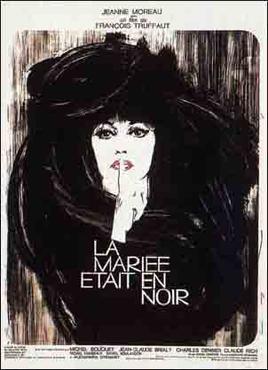
The Bride Wore Black (1968)


What happens when one acclaimed director deliberately styles his film after another? That is one question answered by The Bride Wore Black, François Truffaut's tribute to Alfred Hitchcock. Although the two directors worked in very different genres and styles (not to mention countries), they had great admiration for each other's work - Truffaut even published a book of his interviews with Hitchcock. But imitation is the sincerest form of flattery, and Truffaut decided to film a deliberately Hitchcockian thriller. The resulting film is not as inventive or influential as some of Truffaut's other films, like The 400 Blows or Shoot the Piano Player, nor does it rise to the heights of Hitchcock's greatest films. But it is a perfectly effective and clever little film about a woman set on revenge at any cost.

We are first introduced to the titular bride, Julie Kohler (Jeanne Moreau), when her mother foils her clumsy suicide attempt. Soon after, she leaves on a revenge mission to kill the five men who accidentally shot her husband. This motive is not revealed immediately - Truffaut makes an effective use of flashbacks at different stages in the story to slowly reveal the connections between the men, and to display the awful truth behind what happened that wedding day.

Hitchcock's influence is readily apparent throughout The Bride Wore Black. The plot itself is pure Hitchcock, and Jeanne Moreau's icy protagonist (or antagonist, depending on how you see it) would be perfectly at home in any of his films. The movie is also stylistically similar to much of Hitchcock's work, using bright colors and employing a Bernard Herrmann score (Herrmann was Hitchcock's main composer). Individual scenes, as well, struck me as possible homages. The first victim's death (by plunging from a high building) is rather clumsily filmed, but no doubt inspired by Vertigo. And a scene at a classical concert struck me as a possible nod to the climax of The Man Who Knew Too Much. But beyond any superficial homages, The Bride Wore Black is most closely related to Hitchcock in the way it finds the terrifying in the ordinary. Like Hitchcock, Truffaut establishes his characters very slowly. A scene at the beginning, where two friends are conversing about women and love, reminded me of The Birds, which is basically a romance story before the bird attacks ravage the town. Similarly, Truffaut establishes a seemingly banal setting and then startles us by introducing violence.

The Bride Wore Black may be effective as an homage, but it is not as effective as a thriller unto itself. At times the film limps on rather slowly without much of a point. There is one scene that achieves a high level of suspense, but there are few genuinely frightening moments. Perhaps I am wrong, though, in even classifying the film as a thriller. One could easily argue that the movie is a black comedy. Many scenes have an ironic or even comic overtone, particularly the brilliant final scene.

The Bride Wore Black is a modest little film. It was not career-defining for Truffaut, nor will it be life-changing for anybody. It was, perhaps, more of an experiment for Truffaut than anything. But the film has its fair share of merits. It is an entertaining revenge film, anchored by a strong lead performance, capped off with a nice dose of black humor.

Verdict: B

Monday, December 22, 2008

L'avventura (1960)


L'avventura (English title: The Adventure) is a strange title for any film. It is certainly a nondescript title, and it implies a sort of light-hearted escapism. But Michelangelo Antonioni's 1960 film offers nothing of the sort. It is a film where the "adventure" - namely the disappearance of a wealthy socialite on an island - plays second fiddle to the characters and their relationships. This deception initially led to a vitriolic public reaction, and the film was booed by the audience when it premiered at the Cannes Film Festival in 1960. But two years later it was voted by Sight & Sound as the second greatest film of all time, and it is regarded as a milestone in foreign cinema today.

The story begins with two wealthy friends, Anna (Lea Massari) and Claudia (Monica Vitti) leaving to go on a yacht trip. Anna brings her boyfriend Sandro (Gabriele Ferzetti), whom she feels frustrated with and distant from. The three depart, along with two other couples, for their excursion. After making a stop at an island, the company soon discovers that Anna is missing. They search the island and call in the police, but to no avail. After a few days worrying, everyone goes on with their lives - including Sandro and Claudia, who are beginning to fall in love.

L'avventura never resolves the mystery of what happened to Anna. It doesn't need to, because that is not what the film is about. Anna's disappearance only sets the stage to illuminate the shallowness of the main characters' lives. Days after his girlfriend's disappearance, Sandro and Claudia share a kiss, and proclaim their love for one another. In the same period of time, Giulia (Dominique Blanchar), another friend of Anna's, begins to crack jokes about her disappearance. She has also begun dating a 17 year-old painter, seemingly bored with her previous squeeze, an older man named Corrado. Immediately we begin to understand one of the points of L'avventura - friendships mean nothing to these people. They lead perfectly comfortable yet incredibly empty lives. Pauline Kael put it better than I ever could: "Too shallow to be truly lonely, they are people trying to escape their boredom by reaching out to one another and finding only boredom once again.'' In this way, the themes of L'avventura are very similar to those in La Dolce Vita, another Italian film released the same year.

L'avventura is also notable for its beautiful cinematography. In fact, the film won a special jury prize at Cannes in part for "the beauty of its images." Yet the cinematography did not inspire me in the way that films like Lawrence of Arabia do. It is perfectly adequate, even above average, but I think almost anyone can make shots of Italian islands and crashing waves look appealing. Few images stayed with me, with the exception of the last scene. It is an exquisite, silent scene that relies on the power of images rather than dialogue to bring the film full circle. That is the second reason why the film won the jury prize - it was cited for the creation of a "new cinematic language." The film did not rely on plot gimmicks, narration, or even much dialogue to tell its story, preferring instead to focus on the images.

L'avventura is a very accomplished and influential film, but it did not resonate with me the way that La Dolce Vita did. I found La Dolce Vita a more profound film, with deeper themes. Yet a comparison between the two may be unfair, and I have found that many foreign films require at least two viewings before full appreciation sets in. On its own terms, L'avventura is a fascinating and intelligent film as well as an important landmark of cinema.

Verdict: B+

Monday, November 24, 2008

La Dolce Vita (1960)


Federico Fellini's La Dolce Vita is perhaps most remembered for the image of beautiful blonde actress Anita Ekberg standing in a fountain in Rome. It is an iconic image; recognizable even to those who have not seen the film. Ekberg plays an American actress named Sylvia, but she is only a minor character in the film, just one of many characters who pass through the story. In fact, La Dolce Vita is a very episodic film with few recurring characters. The one thread that ties it all together is the character of Marcello (Marcello Mastroianni), a photojournalist who lives the "sweet life" in Rome - driving expensive cars, eating at cafes and cavorting with movie stars. The movie exposes the shallowness of such a life, and is particularly relevant in this age of Paris Hiltons and Lindsday Lohans. But to look at La Dolce Vita as merely a message movie is to ignore the most compelling reason to see it - it is a fascinating character study, featuring beautiful cinematography and directed by a top-class filmmaker at the height of his power. 

It is difficult to summarize the "plot" of La Dolce Vita because it is by no means a traditionally structured narrative. The film is mainly a string of disconnected sequences, each representing one night in Marcello's life. There are a few recurring characters, though - Emma (Yvonne Furneaux) is Marcello's estranged and suicidal girlfriend. Steiner (Alain Cuny) is one of Marcello's idols, a seemingly happy intellectual with a wife and kids. Maddalena is a rich heiress who Marcello encounters at the beginning and end of the film. 

The film's structure is at times frustrating. Upon first viewing, some sequences seem overlong, and the film lacks a cohesive flow. Yet that is part of what La Dolce Vita so brilliant. Its disjointed structure illustrates the empty life of Marcello. He spends his nights at sumptuous parties, drinking with beautiful women, but never finds a stable relationship or any real meaning in his life. The same holds true for the people Marcello surrounds himself with. 

In one telling sequence, Marcello's father comes to Rome and visits his son. Marcello expresses a clear desire to connect with his father, but at dinner his father is distracted by an alluring chorus girl. They go home together, but at dawn his father becomes sick and eventually must leave on an early train. The scene is revealing because it shows how Marcello's character flaws go back to his father, but also that Marcello is looking for a real relationship with his father. Mastroianni perfectly exudes a lonely yearning in that scene. 

Another central figure in the story is Steiner, who in many ways represents what Marcello would like to be. Steiner is a serious writer, a family man, and fancies himself an intellectual. But he is not as happy as it would appear, which is made tragically clear later in the film. The character of Steiner, and indeed all of the supporting characters, are wonderfully sketched by Fellini, the screenwriters, and a gifted cast. 

Another one of the the film's assets is its gorgeous black-and-white cinematography. Many of the images in the film are extremely memorable.  The fountain scene is the most obvious example, but there are others. A Christ statue being towed over Rome by a helicopter. The deserted streets of Rome at night. Marcello's father, blankly staring out of an apartment window. And the perfect final few shots of the film, which I will not reveal here.  

La Dolce Vita is also fascinating for its depiction of the paparazzi. In fact, the word "paparazzi" comes from the film's character of Paparazzo, who is one of the many photojournalists who swarm around the lives of the main characters. The paparazzi are ever-present in the movie, and they have no sense of decency. When Marcello gets into a fight with Sylvia's boyfriend, they do not rush to help their friend but rather rotate around the fight to get the best shot. When a woman is informed of a family tragedy, dozens of them crowd around her to capture her reaction. The film is almost scarily accurate in this depiction, especially since it holds true today. 

La Dolce Vita is a long and at times frustrating film - its unconventional structure may try the patience of some viewers. But that is really the only criticism I can give it. The film is positively overflowing with ideas, and its influence on cinema is remarkable. Yet aside from any historical importance, La Dolce Vita is a wonderful film in its own right. The story is heartbreaking, the cast impeccable, and the cinematography beautiful. For adventurous filmgoers, La Dolce Vita will provide food for thought for years to come. 

Verdict: A


Monday, November 10, 2008

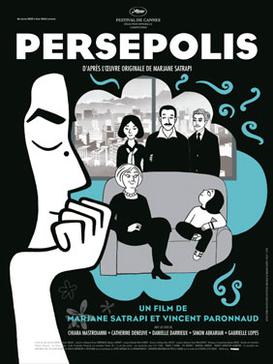
Persepolis (2007)


Persepolis is nothing if not ambitious. It almost defies labeling, because it is such a unique creature. It walks a thin line between comedy and drama. It is an animated film and contains flights of fantasy, but its characters and story are rooted firmly in reality. It is in some ways "artsy", with its stylistic animation and its mature storyline, but it always feels accessible. What is perhaps most surprising about the film, then, is that all of these elements come together and the film works beautifully. 

Persepolis, based on a series of graphic novels, is a semi-autobiographical story about Marjane Satrapi, an Iranian woman who grows up during the late 70s and early 80s, a very turbulent time for Iran. She is witness to the revolt against the Shah regime, wars with Iraq, and other conflicts. At home and abroad, Marjane struggles with her Iranian identity, depression, an increasingly restrictive society, and of course love over the course of the film.

The animation of Persepolis is quite striking. The vast majority of the film is composed of hand-drawn* black and white animation. Although studios like Pixar deliver some fine computer-generated animation, it is refreshing to see a more traditional approach inPersepolis. The animation is particularly inspired during the historical interludes, in which rulers are portrayed as puppets being manipulated on a stage. But other images remained in my head. Long lines of soldiers shoot at each other across a ditch and then fall in, as the bodies pile up. Marjane and her boyfriend fly through the city in their car. Waves in the ocean are seen as massive swirls that gently bob up and down. 

But perhaps the most compelling reason to watch Persepolis is simply its story. The film's characters are fully rounded, and the humanity of the story is compelling. Marjane's tale is essentially a coming-of-age story, but it never dissolves into cliché. Marjane's relationship with her grandmother, her disenchantment with the superficiality of European society, and her struggles with love all feel like the genuine conflicts of a real person. I fear, though, that I am making Persepolis sound too serious. The truth is that Persepolis finds great humor in Marjane's story. In one of my favorite scenes, an adolescent Marjane walks down a street in Iran past a line of shady looking men with trenchcoats, whom look like they could be drug dealers. But no, they are merely selling lipstick, nail polish, and Stevie Wonder CDs. In another scene, Marjane struts down the street, singing "Eye of the Tiger." 

Persepolis succeeds not only as an animated movie but as a great film in itself. The film combines a compelling storyline with a striking visual style and is truly a must-see.

Verdict: A

*Note: I said the animation was hand-drawn, but it was most likely created and edited on a computer. Still, it looks hand-drawn, and the point still stands that it looks very different than anything the American animation studios are producing.

Friday, October 31, 2008

The Passion of Joan of Arc (1928)


The Passion of Joan of Arc is one of those films that I have been meaning to watch for years. My dad bought the DVD for my mom several years ago, and it has remained on a bookshelf in her study all these years. But somehow I never got around to watching it. I had heard that Maria Falconetti's performance was tremendous, that the film was highly influential, and that many critics upheld it as one of the greatest films ever made. Yet I always resisted, thinking that it would be too long, or too confusing, or too dated, or, frankly, too boring. But seeing as I was home from school today, I thought I should at least give it a chance.

What was I waiting for? The Passion of Joan of Arc is honestly one of the greatest films I have ever seen. I try to avoid statements like that, but I really cannot resist in this case. All of my fears about it being too complex or long were completely unfounded. The film is under 90 minutes long, and the story it tells is very simple. It's not at all a traditional "biopic;" it is only focused on the last days of Joan's life, when she was interrogated and executed by ministers of the Church.

Maria Falconetti, who never again starred in a movie, plays Joan of Arc. She is without a doubt the most extraordinary thing about the movie; I can't imagine what it would be like without her. The film is shot almost entirely in close-ups, and thus relies quite a bit on Falconetti's facial expressions to convey the character. The huge range of emotions that she can express is incredible. Joan's character is established immediately from her entrance. The film's Joan is bewilderedn and frightened, totally overwhelmed by the circumstances she finds herself in. Falconetti never loses touch of the human side of Joan. In other films Joan might be seen as a fearless leader, uafraid to the death. But Falconetti's character clearly struggles with the questions the judges ask her about her relationship with God. She has a huge internal battle about whether to give in and survive or maintain her position. One of the most telling scenes comes when Joan is first taken out to be executed. A priest gives her one last chance to recant, insisting she sign a document that would let her live. Joan hesitates, but then sees a man digging her grave. As he shovels dirt out of the ground, his shovel tosses up a skull. After seeing this, she reluctantly signs the document. Of course, she will later deny this confession and be burned at the stake. Falconetti's performance in this scene, and throughout the film, really needs to be seen to be believed.

But there are other strengths in the film besides the main performance. The director, Carl Theodor Dreyer, uses one editing technique (a quick-cut montage) that I didn't even know was around in the 20's. It is used in the scene where Joan is taken to the torture chamber. The ministers threaten her with torture if she does not sign the document. As a man cranks a spiked wheel, Joan stares on in horror. The scene cuts back and forth between Joan's terrified face, the wheel, and occasionally the ministers. The shots get quicker and quicker until Joan finally faints. This scene is particularly effective, but there are others. Dreyer's use of close-ups and cuts between the various ministers in the interrogation scene are just as effective; they show how overwhelmed Joan is at all of these anonymous faces cursing and condemning her.

The script has no elaborate touches; it is very simple and is based on historical accounts of Joan's trial. However, there are some subtle nuances that occur throughout. For example, there is a great moment when Joan is sick in bed after she has fainted. The bishop tells Joan that the Church is merciful, and always welcomes back a "lost lamb." Joan reaches out her hand to the bishop, seeking comfort. He pushes it away, disgusted at the very idea that she would touch him. There are also some very noticeable Christ parallels throughout the film. I noticed these particularly in the interrogation scene, and also when several soldiers mock Joan and place a sort of makeshift crown on her head - a crown that she later wears when she is burned at the stake.

The Passion of Joan of Arc really is a flawless movie. Maria Falconetti's performance is rightfully hailed as one of the greatest screen performances ever. In addition, the film is fascinating to watch for its innovative camera and editing techniques. Regardless of your religious affiliation or your opinion about Joan, The Passion of Joan of Arc is a groundbreaking film that will deeply touch anyone who is not made of stone.

Verdict: A+