Saturday, July 31, 2010

Sunrise (1927)

Quick trivia question: what was the first Academy Award winner for Best Picture? The official answer is 1927's Wings, directed by William A. Wellman. But in fact, there were two winners that year: Wings won for "Best Production" but F.W. Murnau's Sunrise won for "Unique and Artistic Production." Over time, the dichotomy between those two films has grown even sharper: Wings, a romantic, expensive World War I spectacle, has all but receded from memory - or to be more accurate, is more remembered in name than for its artistic merits. Sunrise, on the other hand, was largely ignored by audiences upon its initial release, but has since become a film school staple and is widely regarded as one of the greatest films ever made. Indeed, the greatness of Sunrise lies not only in its importance to film history - for combining the sensibilities of German and American filmmaking, and for its array of innovative visual and aural effects - but also in its sheer beauty. This is not a stuffy old silent film, but one of the most ravishing and lyrical films I know.

To summarize Sunrise is to trivialize it. The film involves three main characters: The Man (George O'Brien), The Wife (Janet Gaynor), and The Woman from the City (Margaret Livingston). The Man is a farmer who begins an affair with The Woman, who then convinces him to drown his wife. The Man brings his wife out on a boat to do the deed, but cannot go through with it. The rest of the film concerns The Man's attempt to repair and renew his relationship with The Wife.

Right down to the lack of character names, Sunrise has the potential for a simplistic, treacly allegory. That it is something more is above all a tribute to F.W. Murnau. Murnau was one of the most significant pioneers of German Expressionism - a bold, exaggerated style that utilized high contrast cinematography, oblique angles, and shadows to great effect. It was a style most famously used in horror (Nosferatu, The Cabinet of Dr. Caligari) and sci-fi (Metropolis); it also provided part of the inspiration for American film noir. Sunrise does not sound like it would need this kind of treatment. But Murnau uses it to explore the dark side of its protagonist's heart.
Murnau's visual style in the opening and closing scenes - looming shadows, canted angles, and dimly lit shots - reflect The Man's estrangement from his wife, and his tortured sense of guilt. At the beginning of the movie, this estrangement is out of choice; The Man chooses to abandon his wife to elope with another woman. By the end of the movie, the two have reconciled, but after a fateful storm, The Man believes he has lost his wife forever. In shots like the one below, Murnau seems to suggest that without his wife, The Man is quite literally a shadow of his former self.Murnau's visual mastery also extends to his use of superimpositions. Several times throughout the film, Murnau uses these layered images to explore the characters' dreams, hopes, feelings, fears, and nightmares. This kind of effect could be cooked up easily today, but in Murnau's time, it was a painstaking process. Whatever the limitations of the technology, though, the superimpositions still hold up today as evocative, sensuous, telling images.
I've barely scratched the surface of Murnau's innovations. I could also point to his roving camera, in an era when cameras were bulky and usually kept stationary. I could mention his use of Movietone, an early soundtrack system, to include not only a classical film score but also numerous sound effects. But the real genius of Murnau's film is how seamlessly these techniques are woven into the fabric of the story. His direction is never intrusive or distracting, and he knows when to simply pull back and observe. During the long reconciliation scene, Murnau leaves most of the heavy lifting to his wonderful, expressive actors.

I'm reluctant to call any film perfect, but Sunrise comes as close as any film I've seen. The movie was initially overshadowed by movies like Wings as well as The Jazz Singer, the first talkie, released the same year. Within a few years, silent films would be all but obsolete in Hollywood. Yet Sunrise reveals all the possibilities of that medium, and achieves a level of purity and simplicity that few films can claim. With silent films as great as this, who needs sound anyway?

Coming soon to the blog: a trio of Nicholas Ray films!

Monday, July 19, 2010

Make Way For Tomorrow (1937)

Upon first glance, Make Way For Tomorrow looks like an awfully treacly, didactic melodrama. The movie opens with a shot of the sky, a bombastic music cue, and a title card outlining the major themes of the movie - the "painful gap" between "the aged and the young." The whole thing caps off with "the ancient words of a very wise man - HONOR THY FATHER AND THY MOTHER." Thankfully, though, this well-meaning but rather overstated opening is hardly indicative of the film that follows. On the contrary - Make Way for Tomorrow is a remarkably subtle film, full of quiet observational grace. It regards its characters honestly, objectively, in all their faults and failings. And yet the movie balances this objectivity with deeply felt empathy. Though the film is 73 years old and tells a simple story of an elderly couple cast out of their home, it is universal in the way that it shows how we all live our lives.

As the film begins, the elderly Lucy (Beulah Bondi) and her husband Bark (Victor Moore) gather their children to make an announcement: they have lost their home to a bank, and need to move out in a few days. None of the children claim to have the resources to support both parents, so as a "temporary measure" Lucy stays with their son Robert (Thomas Mitchell), while Bark goes with their daughter Cora. The children assure their parents that everything will work out, but as Bark is quick to mention, "It never has worked for any one else."

The film picks up with the parallel stories of Lucy and Bark trying to cope with their new separate lives. Robert, ever the devoted son, looks kindly after his mother, but his wife Anita (Fay Bainter) and daughter Rhoda (Barbara Read) see her as little more than a nuisance. Bark, meanwhile, makes friends with a local Jewish storekeeper (Maurice Moscovitch), but otherwise feels neglected by his own family.

And so Make Way for Tomorrow proceeds - moment by moment, dealing in insightful observations rather than dramatic revelations. The story may sound slight, but the film's profundity lies in its details - in the embarrassed looks exchanged by the children in regards to their parents, in the way that Bark and Lucy withhold their emotions from their children, in the way actress Beulah Bondi delivers simple lines like "Don't worry about me" while suggesting so much more. Every scene of this film is full of such moments - details of family life that are so honest and observant that they can be painful.

The cast (largely unknown, but uniformly strong) and the writers certainly deserve praise, but at least equally important is the man behind the camera: Leo McCarey. McCarey is not remembered today; perhaps he worked in too many genres to be easily pinned down as an auteur. Moreover, McCarey follows the classical Hollywood tradition of invisible style: the camera shows only what needs to be shown, and the style never draws attention to itself. Still, this is surely one of the film's assets. Not a shot is wasted, and the whole movie unfolds with economy and precision. McCarey always knows where to place the camera. Consider an early scene, when Lucy loudly talks on the phone to Bark, interrupting the bridge game of Robert, Anita, and friends. For most of the scene, McCarey uses two camera set-ups, cutting back and forth between the two. The first shows Lucy in the foreground, with the scowling bridge players in the background. The second is a reverse-shot, isolating Lucy in the background while placing the others in the foreground.Those two shots are deceptively simple. McCarey is actually breaking one of the fundamental principles of continuity editing: the 18o degree rule. In doing so, McCarey creates a tone of awkward embarassment, revealing how oblivious Lucy is to her surroundings. But he also allows us, literally and emotionally, to see both sides of the scene. In the shot of Lucy in the foreground, we see Lucy's excited expressions, hear the happiness in her voice, and as a result empathize with her. In the second shot, we realize just how loud Lucy is, and how she is disrupting the game, and thus empathize with the bridge players. That seemingly simple camera setup is really a microcosm of what makes the film great: an ability to be objective about the story, to understand multiple sides of an issue.

As mentioned earlier, McCarey largely adheres to the invisible style of Hollywood filmmaking. But within the boundaries of that tradition, his shots are often rife with meaning. This ironic shot shows Lucy and Bark gazing at a window display with the advice, "Save While You Are Young" - exactly what they both failed to do.


That shot takes place near the end of the film, when Lucy and Bark are reunited in New York. They spend a few precious hours together - walking in parks, going to restaurants, visiting a hotel they both stayed at, talking about the past - before Bark must leave on a train for California. He is to move in with another son there; Lucy will be sent to a rest home in New York. It is in this final passage that all of the movie's themes become clear. "I figure that everyone is entitled to just so much happiness in life," Lucy tells Bark. "Some get in the beginning, and some in the middle, and others at the end. And there are those who have it spread thin all through the years." Lucy and Bark get one last day of happiness together, and then Bark leaves. In the final shot, Lucy gazes after the departing train, watches it go, and turns to leave the frame as it fades to black.

The studio tried to impose a happy ending, but McCarey refused. As it is, the ending is devastating but perfect. A happy ending would have been a betrayal of the movie's themes. It is a movie that contains great love and joyous moments, but more importantly it is about life's little disappointments, about how bad things can happen to good people for no reason. The title, I think, is ironic. This is not a cautionary tale about preparing for the future. In fact, the movie seems to say that we cannot prepare for what will happen. Tomorrow makes way for itself.

After years of being unavailable on video, Make Way for Tomorrow was released on DVD earlier this year as part of The Criterion Collection. It's certainly well worth your time to catch up with this neglected classic.

Wednesday, April 21, 2010

The Human Condition (1959-1961)


Masaki Kobayashi's The Human Condition is exactly what it sounds like - a long, sprawling, grandiose epic about war and heroism and patriotism and humanity and a whole variety of other things. Unsurprisingly, it is overlong and overambitious. More surprisingly, it is often a bore. The first film in the trilogy is at least engaging as a conventional war story and character study, but the second and third parts become so prolonged and predictable that when the trilogy finally stopped in its tracks, nine and a half hours after it started, I had lost interest. There is a lot of money thrown at the screen, and a lot of speechifying, and many pretty widescreen vistas. But none of that can hide the film's lack of a meaningful insight into any of the themes it considers.

The Human Condition
was originally released as three films, each about three hours long. In Part 1, we are introduced to the protagonist, Kaji (Tatsuya Nakadai), a young management trainee who gets appointed to the position of a labor camp supervisor in Manchuria during World War Two. There, he tries to implement his socialist ideals in the treatment of the workers, but is opposed by an immoral and rigidly bureaucratic military system. In Part Two, Kaji becomes a soldier in the Imperial Army and is sent to the front lines. In Part Three, a disillusioned Kaji deserts in order to return to his wife Michiko (Michiyo Aratama).

If that plots sounds awfully tidy, it's because it is. From very early on, we know where this is heading. The film follows a linear decline: as time progresses, Kaji's circumstances become more dire, he becomes increasingly cynical, and the film's mood becomes all the more somber, its tone all the more self-serious. Even with nine and a half hours to spare, Kobayashi finds little time to develop his characters in any but the most basic ways. Kaji does change over the course of the trilogy, but his development seems perfunctory, always at the service of the plot and Kobayashi's grand thematic aspirations. The films were based on a six-part novel, and apparently Kobayashi was so enamored of it that he cut almost nothing from the book. But his slavish devotion to the arc of the novel doesn't give the film any room to breathe.

On a technical level, The Human Condition is somehow less than the sum of its parts. Kobayashi hired a new cinematographer, Yoshio Miyajima, specifically for the film. He also employed a then-innovative widescreen film format called Grandscope. Kobayashi's direction is clean and clear, but also rather dull. The camera seems to merely record the action. There are many wide shots of landscapes, but one gets the impression that Kobayashi and Miyajima are merely straining for grandeur; the shots lack depth and meaning. In terms of music, Kobayashi lays it on pretty thick, employing loud, bombastic swells to call our attention to anything particularly dramatic.

For a while, The Human Condition gets by on the strength of its cast. As Kaji, Nakadai is eminently likable, and convincing in his descent from sincere idealist to disillusioned cynic. Aratama, playing his wife, is equally good in what could have been a thankless supporting role. These two actors keep the audeience interested, even as the plot follows its all-too-predictable course.

The Human Condition is perhaps most interesting as a social and political document. Released 15 years after the end of World War two, the film - which depicts the entire Japanese army as a corrupt and outdated institution - was enormously popular in Japan. That says a lot about the nation's postwar attitude. The film's existential concerns also clarify why it was so popular; such themes were the staple of 60's "arthouse" cinema.

Still, the fact that the film's social and political context is its most interesting aspect suggests a larger truth - that over time, The Human Condition has become dated and esoteric rather than universal. Kobayashi's literal-minded and heavy-handed apporach to the film renders it curiously unaffecting. It seems to me the Japanese equivalent of a particularly overwrought Hollywood epic, or maybe a Japanese imitation of a David Lean film. Perhaps the only reason why this film is so revered, why the critic David Shipman called it "unquestionably the greatest film ever made," is that it comes dressed up in subtitles and a long running time, making it seem worth more than it really is.

Sunday, February 14, 2010

A Different Kind of Top 10 List

It is customary for movie critics to finish the year with a list of their 10 favorite movies of the past year. Seeing as I spend much more time watching classics than new releases (I haven't even seen 10 new movies this year), I figured I would present my own variation. These are the Top 10 movies that I saw for the first time in 2009.

I have always been obsessed with movies, but this past year was when my obsession came to fullest fruition. I went through Netflix discs rapid-fire; I went to the library to track down VHS copies of more obscure films; I taped films off of TCM; I got rides to the Brattle and Coolidge Corner Theaters. Unfortunately, I also slacked off when it came to blogging. I was moving through movies so quickly that I thought writing about them would slow me down! So here is an opportunity for me to talk about the movies that made the most impact on me this year - many of which I haven't yet written about.

Limiting this list to 10 proved a challenge, and as a result many great films were excluded. I decided to include a long list of honorable mentions, all of which are just as worthy as the top 10. Without much further ado:

10. Days of Heaven: Terrence Malick's 1978 film begins as Bill (Richard Gere), a Chicago steelworker, accidentally kills his supervisor and flees to the wheatfields of Texas with his girlfriend and sister. This fairly standard lovers-on-the-run plot suggests little of the film's beauty. The viewers sees the story from a distance, through the eyes of Linda, Bill's sister. Her voiceover narration is astonishing in its detail and insight. Ennio Morricone's score is alternately uplifting and haunting. But what remain most of all are the images. The cinematography, by Nestor Almendros and Haskell Wexler, captures the beauty and harshness of the natural world like no other film I have ever seen.

9. Woman in the Dunes: Hiroshi Teshigahara's bizarre masterpiece was an arthouse sensation in its day but is now largely forgotten. The script was written by Japanese writer Kobo Abe, from his novel about a bug collector who stays a night at a widow's shack, but is held against his will, forced to shovel out the sands that continually encroach her home. The film is above all an existential allegory, but it is not easily classifiable. It is a variation on the myth of Sisyphus, a psychological study, and a story of obsessive, erotic love. Despite its pretentious trappings, the powerful acting and unsettling mood (symbolized by the ever-sifting sand) make Woman in the Dunes a consistently fascinating film.
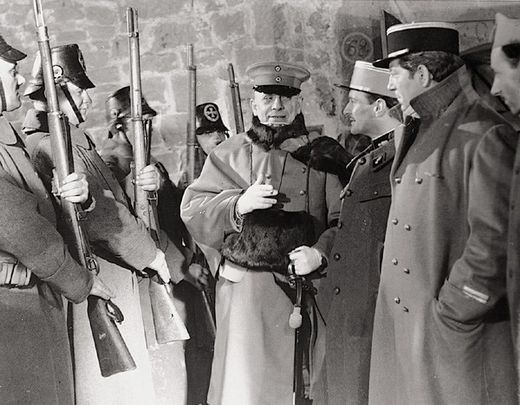
8. Grand Illusion: Jean Renoir, like his successor François Truffaut, is one of cinema's great humanists. This 1937 film, about a group of French POWs and their German captor, is a detailed and moving character study, as well as a reflection on the European class sysem. It never resorts to melodrama or easy moralizing. It effortlessly moves from romance to cynicism and back again, with grace and style.
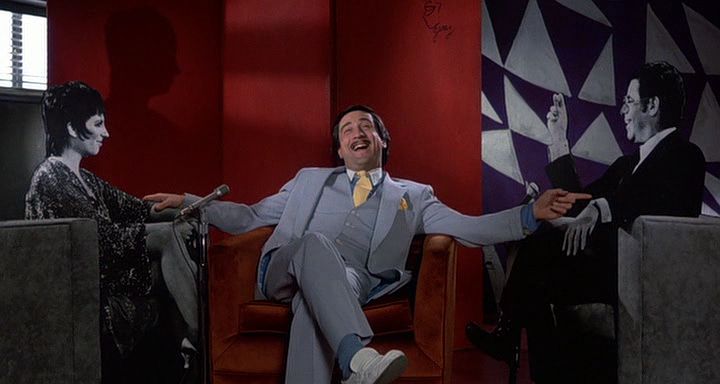
7. The King of Comedy: Of all the collaborations between Martin Scorsese and Robert De Niro, The King of Comedy may be the least well known - and arguably the greatest. The film plays like a black comedy version of Taxi Driver. De Niro is Rupert Pupkin, an aspiring stand up comic who worships late night comedian Jerry Langford (Jerry Lewis). When he fails to break through in the business, Pupkin decides to kidnap Langford in an attempt to get on the show. The film is undoubtedly funny, but it is also unsettling in its depiction of its delusional, celebrity-obsessed characters. The ending seems prophetic in the wake of today's reality TV landscape. It's also perhaps Scorsese's most experimental film; he toys with notions of reality and fantasy without telling us which is which.

6. Apocalypse Now: When I first saw Apocalypse Now, I loved it almost unreservedly, though I didn't really "get" the ending. Upon subsequent viewings, I think that may be less my fault and more Coppola's - the ending seems less assured and cohesive than the rest of the film. Still, Apocalypse Now is pretty stunning. The idea that war is hell is hardly original; but Coppola expresses it visually like no other war film I have seen. And he does not focus merely on the physical realities of battle, but also reveals the inner psyche of the soldier. Apocalypse Now is far superior to say, the contrived The Deer Hunter or the simplistic Saving Private Ryan.
5. The Apu Trilogy: Satyajit Ray has long been acknowledged by respected film critics everywhere as one of the greatest directors of all time. Yet he remains largely unknown, and most of his films are unavailable on DVD. I had to watch The Apu Trilogy, perhaps his most acclaimed work, on three scratchy VHS tapes from the library. The trilogy tells the story of Apu, who is born in a poor Indian village and progresses through life to become a scholar, a priest, and a wanderer. Ray was inspired by the Italian neorealist movement (e.g. The Bicycle Thief), which used nonprofessional actors and real locations to depict the everyday realities of working class people. But The Apu Trilogy is not just a depressing evocation of poverty. It is universal in its scope and its depiction of family relationships. And it contains images of such great beauty that they can only be called visual poetry. This is what "humanistic" filmmaking is all about.

4.The Apartment: Every time I see Billy Wilder's The Apartment, I can see its flaws more clearly - it's overlong, Jack Lemmon's acting is a little too hammy, and some of the supporting acting is rather wooden. But Wilder's film is uncommonly affecting, and it strikes a balance between comedy and drama that few films achieve. Jack Lemmon plays C.C. Baxter, an employee in a huge corportation who works his way up by lending out his apartment to his philandering superiors. From this plot Wilder fashions both a cynical satire on the business world and a warm romantic comedy. In addition to the obvious charms of the cast and script, the film earns extra points for its gorgeous, wide-screen, black and white cinematography. Expect more on Wilder - as soon as I see a few more of his films, I'm going to do a retrospective post on the blog.
3. Three Colors Trilogy: Krzysztof Kieslowski's Three Colors Trilogy is based on the three colors of the French flag, and their respective values (liberty, equality, and fraternity). But like Kieslowski's similarly masterful The Decalogue, the films do not get bogged down in abstract theories, but relate with the trials and struggles of real people. The characterizations - by the screewnriters and Kieslowski's cast - are wonderfully nuanced, and Kieslowski's assured direction and perfectly composed images let us known we are in the hands of a master. I recently re-watched these films, about a year after I saw them for the first time, and they still hold up. I even grew to appreciate White, which I had mixed feelings about the first time around but which I now think is just as good as Blue and Red.
2. Nashville: This film - running 2 hours and 40 minutes, virtually plotless, with a cast of 24 characters - could have so easily degenerated into a rambling mess. But Robert Altman somehow makes it work. It's a satire, a character drama, a musical, and a loopy comedy all rolled into one, and one of the film's strength is that it is so mysterious, so hard to classify. That may not sound very appealing, but make no mistake, Nashville is fun, populated with goofy songs and appealing characters. It also, of course, has quite a lot to say about America in the 1970s. I have already seen Nashville twice, and no doubt will return again and again.
1. Persona: There's a certain tendency, I think, to see Ingmar Bergman as the King of pretension, obvious symbolism, and arthouse clichés. That does him a great disservice, especially in a masterpiece like Persona. The film tells the apparently simple story of two women - an actress who has inexplicably decided to stop speaking, and the nurse who is assigned to take care of her. Bergman is at the height of his powers here, and his sheer command of his form is too strong to dismiss the film as pretentious twaddle. The cinematography is so perfect that every shot seems to be a representation of the film's themes. The result is unsettling, dreamlike, and beautiful - "a poem in images," as Bergman called it.


Honorable Mentions (in no particular order):
- Trouble in Paradise
- The Graduate
- Ali: Fear Eats the Soul
- The Decalogue
- In Bruges
- Hiroshima mon Amour
- Network
- Bed and Board
- Sunset Boulevard
- Manhattan
- Swing Time
- Pickpocket
- A Woman Under the Influence
- Ace in the Hole
- Bride of Frankenstein
- Singin' in the Rain

Coming soon to the blog (and I do mean soon!): a review of Masaki Kobayashi's nine and a half hour epic, The Human Condition!

Tuesday, December 22, 2009

Nashville (1975)


A minor controversy arose in the online film scene this past October, when Richard Schickel, film historian and critic for Time magazine, launched a scathing critique of Robert Altman in the LA Times. The occasion was a new book, Robert Altman: The Oral Biography, but Schickel spent most of the article denouncing Altman's personal failings, in addition to spouting out pithy attacks on his films ("To make sure the audience never quite understood what was going on, he overlapped dialogue..."). Schickel concludes that Altman's films are hopelessly dated, and will not "survive as anything more than historical curiosities."

A film like Nashville is undoubtedly emblematic of its times - what with the long hair, the hippies, the drugs, and the music. But what Altman manages to do is create a sardonic commentary on the times posing as a celebration of them. For a director whose films supposedly resemble "someone else's not-very-interesting drug haze," as Schickel claims, Nashville is quite critical of the 70s generation, revealing the hypocrisies that lie beneath the world of politics and the entertainment industry.

In describing Nashville, I am reminded of Mark Twain's preface to The Adventures of Huckleberry Finn: "persons attempting to find a plot in it will be shot." Like many of Altman's films, Nashville is essentially a series of character sketches and vignettes loosely tied to a main idea. The film follows no fewer than 24 major characters - a motley crew of hippies, folk singers, housewives, country stars, reporters, and political campaigners - as they descend on Nashville for a benefit concert. The candidate is Hal Phillip Walker of the "Replacement Party" - never seen, though his voice can be heard delivering speeches from his seemingly omnipresent van.

Using the campaign as a springboard, Altman paints a huge, sprawling canvas of American life. Altman follows dozens of storylines and fills each of his widescreen compositions with detail. His camera is fluid, constantly shifting perspective and revealing new details, making us an active observer. Aside from its technical feats, though, Nashville has grand thematic ambitions. The film is essentially an ironic response to Watergate; Altman contrasts the patriotic American ideals celebrated in the upcoming bicentennial with their seeming irrelevance in a disillusioned America. The whole tone of the film is set by the first song, a patriotic anthem sung by country star Haven Hamilton (Henry Gibson) that includes the not-so-inspiring chorus "We must be doing something right to last 200 years."

That song is the first of many in the film; Altman has even classified Nashville as a musical. Certainly the songs are central to the film, helping to establish mood and develop character. (Almost all of the songs were written by the actors specifically for their roles). One of the most famous is Keith Carradine's "I'm Easy," sung in one of the film's greatest scenes. Carradine's character, a womanizing folk singer named Tom Frank, takes the stage at a local bar and dedicates the song to "someone special who just might be here tonight." Three women - Tom's habitual fling, Mary (Cristina Raines), Geraldine Chaplin's kooky BBC reporter, and a groupie played by Shelley Duvall - all think that the song is about them. But Tom is actually playing to Linnea Reese (Lily Tomlin), a housewife and gospel singer that caught his eye at a recording studio a few days ago. They go to bed, of course, but Linnea decides that the affair must go no further, and she returns to her family. Tom tries to incite jealousy by calling another woman, but Linnea remains strong and leaves with dignity. That scene alone, so rich with restrained emotion and subtle characterization, reveals what a terrific director of actors Altman was.

And it is moments like that which make Nashville so rewarding. For all of his cynical commentary on hypocrisy, Altman makes us genuinely care for his characters. So many of them seem adrift - the lonely old man with the dying wife; the waitress who wants to be a singer but can't sing; the country star's son, who manages his father's career but has no life of his own. In many ways, Nashville is about the ways that these characters envelop themselves in patriotic ideals, in country music - in anything - to make themselves feel better. That theme is there in the first song, and it's there in the last one. After an assassination occurs at the benefit concert, a wannabe country singer takes the stage to lead the crowd in a song called "It Don't Worry Me." "You might say that I ain't free, but it don't worry me," they all sing.

Is that song a stirring hymn of unity, or a feeble attempt to cover up a sad reality? Altman doesn't tell us what to think, and the film's ambiguity is what makes it so fascinating - and so frustrating to viewers like Schickel. Since seeing Nashville last month, I have read a number of reviews and essays concerning the film, but I am still far from penetrating its mystery. Altman once said that it depressed him when people told him they had seen one of his films, when what they meant was that they had seen it once. Coming from the man who made Nashville, you can see why.

****/****

Sunday, September 20, 2009

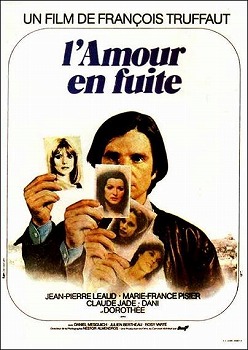
The Adventures of Antoine Doinel - The 400 Blows / Antoine and Colette / Stolen Kisses / Bed and Board / Love on the Run


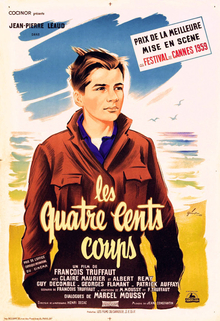
In September 1958, an advertisement appeared in the French newspaper France-soir for a thirteen year-old boy to play the lead role in an upcoming feature film, The 400 Blows. The director was known in some circles for his controversial film criticism, but had never before directed a feature. The actor eventually chosen was also an amateur, and was initially deemed too old for the part. Yet these two men, Francois Truffaut and Jean-Pierre Léaud, forged a creative partnership and friendship that would last for decades. Incidentally, they also made one of the cornerstones of cinema, a film that kickstarted the French New Wave and ushered in a new era of personal filmmaking.

Looking back today, it hardly seems possible for it to have happened any other way. Rarely has there been such a perfect harmony between actor and director, with each man's personality equally informing the character of Antoine Doinel, who evolved in four sequels. The 400 Blows, rightly, is the most admired, but none of the later Doinel films is without value, and they all play off of motifs established in the first film.

In The 400 Blows, Antoine is a 13 year-old living in Paris with a stressed-out mother and distant stepfather. Neglected at home and vilified by his teacher at school, Antoine spends much of his time wandering through Paris with his friend René - going to movies, carnival rides and parks. Due to a series of poor decisions and misunderstandings at home and school, Antoine resorts to petty crime, and is sent to a seaside camp for juvenile delinquents.

Truffaut said his goal was "not to depict adolescene from the usual viewpoint of sentimental nostalgia, but....to show it as the painful experience it is." His visual style fits the mood - the films is shot in gritty black-and-white, set in cramped apartments, crowded prisons and dirty playgrounds. But the film also captures the excitement of living in the city, the simple pleasures of going to the movies and exploring the city with friends. In one sequence, Antoine goes on a centrifugal carnival ride, and ends up suspended in midair, back against the machine as it spins around. Adults watch from a distance, but Antoine can hardly make them out. It is a striking scene, and one that emphasizes Antoine's uncertain place in the world - stuck between childhood and the world of adults who don't seem to understand him.

Then there is the final scene, one of the most famous in cinema. It shows Antoine as he escapes from his juvenile holding camp. For a few minutes, Truffaut just shows us Antoine running, as he seems to do so often in the series. Then, an exhausted Antoine sees the sea for the first time, wades into the water, and turns to face the audience. The film ends with a zoomed-in freeze frame of Antoine's face. This shot, in some ways, is a miniature of the entire film - an honest, unflinching look at adolescence, freed from all sentimentality and false artifice.

Of all the sequels, Antoine and Colette looks most like The 400 Blows, but announces a departure in terms of tone and mood. This time, Antoine is not an angsty, misunderstood adolescent but a plucky 19 year-old working at a record store in Paris. Antoine is also a regular conertgoer, and it is at one such conert that he meets Colette (Marie-France Pisier), who soon becomes the object of his affections. Antoine tries to woo her, but only manages to charm her parents.

Antoine and Colette (a 30-minute short originally made for the omnibus Love at Twenty) seems downright lightweight compared to The 400 Blows. It maintains the previous film's black-and-white photography and Parisian settings, but the tone is more comic and romantic. That does not mean it is a bad film, for it is certainly an acute and bittersweet portrayal of young love. But it is an intermediary film more than anything, and perhaps too short to fully establish itself.

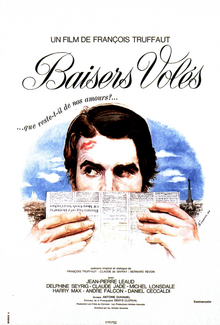
The romanticism of Antoine and Colette is taken even further in the next installment, Stolen Kisses. This time around, Antoine has been dishonorably discharged from the army, and finds himself on the streets of Paris looking for a job. He eventually finds one in a private detective agency. He also finds love, in the form of an older married woman (Delphine Seyrig) and a charming girl his own age, Christine (Claude Jade).

Stolen Kisses is light, funny, somewhat episodic and mostly irresistible. The success of the movie lies not so much in Truffaut's mise-en-scène but in the charms of the characters and script. It is also the film where Léaud, so arresting as the troubled boy of The 400 Blows, emerges as a full-fledged comedic actor. By this point in the series, you can see how the character evolved from a distillation of Truffaut's troubled childhood to a combination of Truffaut and Léaud's sensibilities. At its most basic level, though, Stolen Kisses is a skillful romantic comedy- whimsical, sentimental, slightly forgettable, but hard not to enjoy.

Bed and Board is my sentimental favorite of the Doinel series, though my perceptions of it are no dobut colored by the circumstances in which I first saw it. I saw both Bed and Board and Love on the Run as a double feature at the Brattle Theatre in Cambridge. As someone largely raised on VHS and DVD, seeing a real film print of a cinema classic is truly a thrill that cannot be replicated at home. In any case, though, there is something more about Bed and Board that makes it rise above the other Doinel sequels. The first half of the film is a domestic comedy that resembles Stolen Kisses in its episodic nature and comedic tone. Much of the film is set in a courtyard where Antoine works selling flowers; his wife Christine works as a violin tutor in their apartment a few floors above. Through a series of vigenttes, Truffaut establishes the supporting characters - a moocher who is constantly asking Antoine for money, a woman who is always hitting on him, a silent, shifty-eyed man deemed "The Strangler" by the apartment residents.

But about halfway into the movie, the tone changes as Antoine begins an affair with a Japanese woman. Up until this point in the series, the movies have relied on the natural likability of the main character. Now the empathy switches to Christine, and Truffaut portrays Antoine as a boy who refuses to grow up. In the centerpiece of the film, a separated Antoine and Christine have a passionate discussion which rapidly changes from a heated argument to a declaration of love. At one point, Christine lashes out against Antoine's desire to have everything his way. On the subject of Antoine's autobiographical novel, she says that "if you use art to settle accounts, it's no longer art." You can almost hear Truffaut's doubts in that statement; he seems to be questioning the artistic value of the entire series. At the very least, he seems fed up with playing the story for laughs, and Bed and Board briefly regains the melancholy tone that made The 400 Blows so powerful.

Consider the end of the scene. A cab arrives to take Christine into the city for a night of shopping. Before she leaves, she senses that Antoine is lonely and asks if he wants to go to a movie. After a few minutes of joking around, Christine gets in the cab and asks Antoine to kiss her, although they have already established that they will not be seeing each other. He does, and in typically melodramatic fashion declares, "You're my little sister, my daughter, my mother." Christine responds with an understated "I'd have liked to be your wife too."

This scene alone reveals what a terrific writer Truffaut was; it is an emotional rollercoaster ride in which the confused emotions of the main characters keep bubbling to the surface, threatening to obscure their best intentions to stay away from each other. It may be true, as it is frequently claimed, that by this point in his career Truffaut had abandoned the experimental, avant-garde nature of his early work for a more traditional style. But he never gave up the humanism that made his work so moving and so accessible to so many people. There are no flashy camera tricks or showy editing techniques in Bed and Board. It is purely minimalist, and extremely effective at that. All that needs to be said about Antoine's regret is shown in the shot where Christine's cab pulls away and Antoine walks down a lonely street into a brothel.

Bed and Board was originally intended to be the final Antoine Doinel film, and in retrospect it probably should have been. At times, Love on the Run seems like a clipshow; it features numerous flashbacks to all the previous films, which only makes it seems slight in comparison. It also seems altogether too tidy, with every aspect of Antoine's life coming together to create a happy ending. Finally, Love on the Run is a retreat from the serious reflection of Bed and Board, reverting back to the comedic situational comedy of Stolen Kisses.

The film is helped a great deal by the return of Colette's character; the actress Marie-France Pisier infuses the film with much-needed warmth. The style of the film is also noteworthy - the editing is quick and forceful, featuring swift cutaways and fast zooms. But the story is ultimately where the film falls apart. Antoine's love interest, Sabine, hardly establishes a personality of her own, and there is a genuine lack of new, interesting material.

Despite the final film's shortcomings, the Antoine Doinel series really is a remarkable piece of work. It is too easy to dismiss the sequels to The 400 Blows as sentimental fluff, but this is simply not the case. Watching the entire series, you can trace the evolution of Antoine Doinel not only in terms of plot, but in the sensibilities of his creators. You can also see the whole series as an examination of the fine line between adolescence and adulthood. Or you can simply get caught up in the story, in the acute feelings that Truffaut's films so effortlessly exude. No matter how you look at it, The Adventures of Antoine Doinel is a success.

Ratings (out of 4 stars)
The 400 Blows: ****
Antoine and Colette: ***
Stolen Kisses: ***
Bed and Board: ****
Love on the Run: **1/2

Saturday, September 12, 2009

Breaking my own rule

I know, I know. After only a few weeks, I've already broken my goal of posting one blog a week. The simple fact is that I had no conception of how time consuming my summer reading and summer work would be. And now that school has started it's even more hectic. However, in my spare time I will try to write as many reviews as possible. The long-delayed post on Truffaut's Antoine Doinel series is coming up next, though I'm not sure exactly when. Stay tuned, and thanks for your patience!